133 · INFINITO DELICIAS bd
Composition of knowledges
* Casa de la Arquitectura Award 2026, category ES_INNOVACIÓN (2026).
* FAD Award 2026, category Architecture (2026).
* COAM Award (2026).
* ROOM Award, category Architecture (2026).
* ALDES Award for the Best Project in Sustainability, Decarbonization, or Best On-Site Energy Generation in a Building. Rebuild (2026).
* First Prize CESUGA Awards Wooden Architecture, category Refurbishment (2026).
* MARCH Awards 2026, Honorable Mention in the Large Adaptive Reuse Category (2026).
* Selected CSCAE Award (2026).
* Finalist Egurtek Award Wood Architecture and Construction, category Building (2026). [Award decision: 10/26].
* Finalist BREEAM, categories Climate Resilience Excellence, Communities & Social Value Leadership, Refurbishment & Fit Out Excellence, Small Project, Big Impact (2026). [Award decision: 09/26].
* Selected for the 14th Ibero-American Biennial of Architecture and Urbanism (XIV BIAU), category: Works (2026).
Composition of knowledge
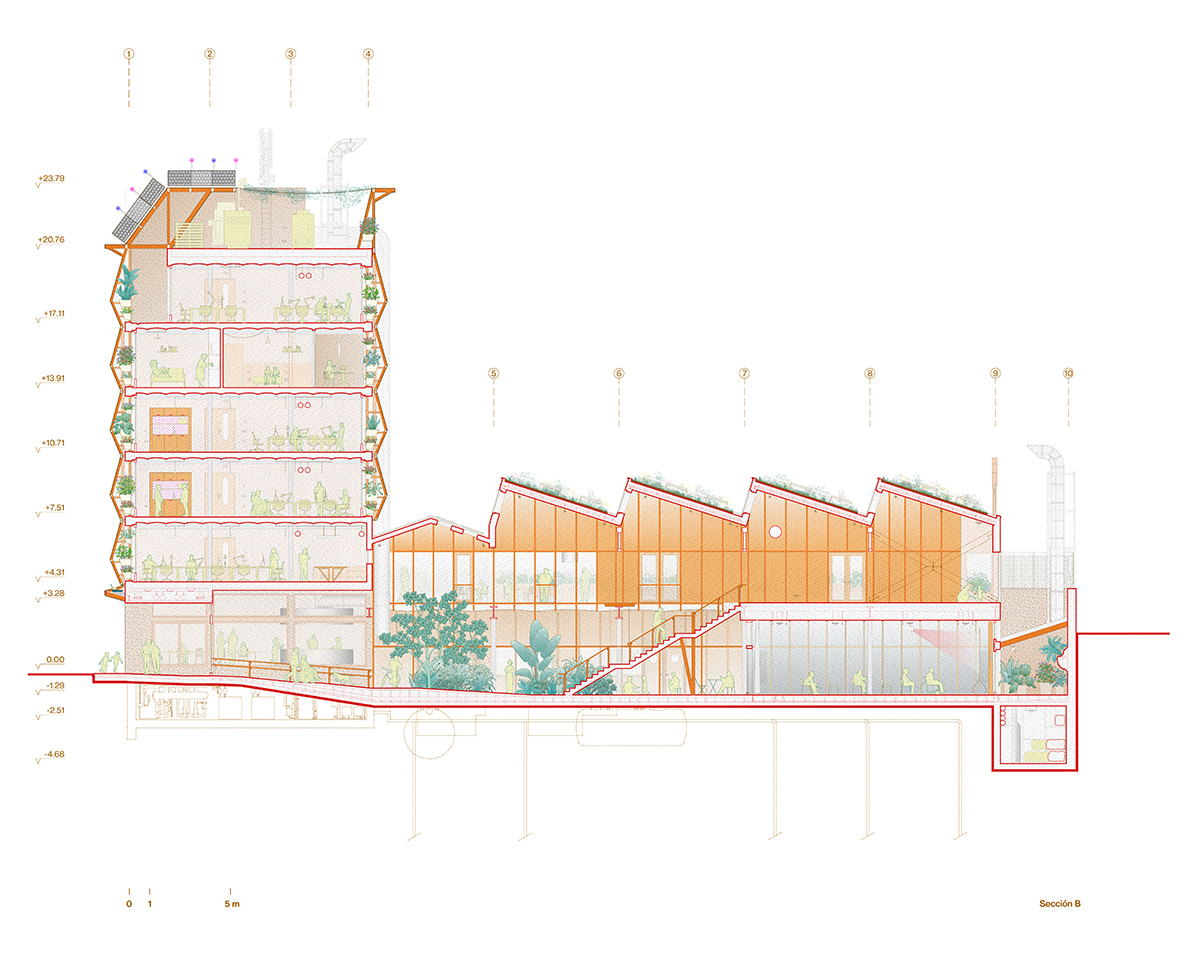
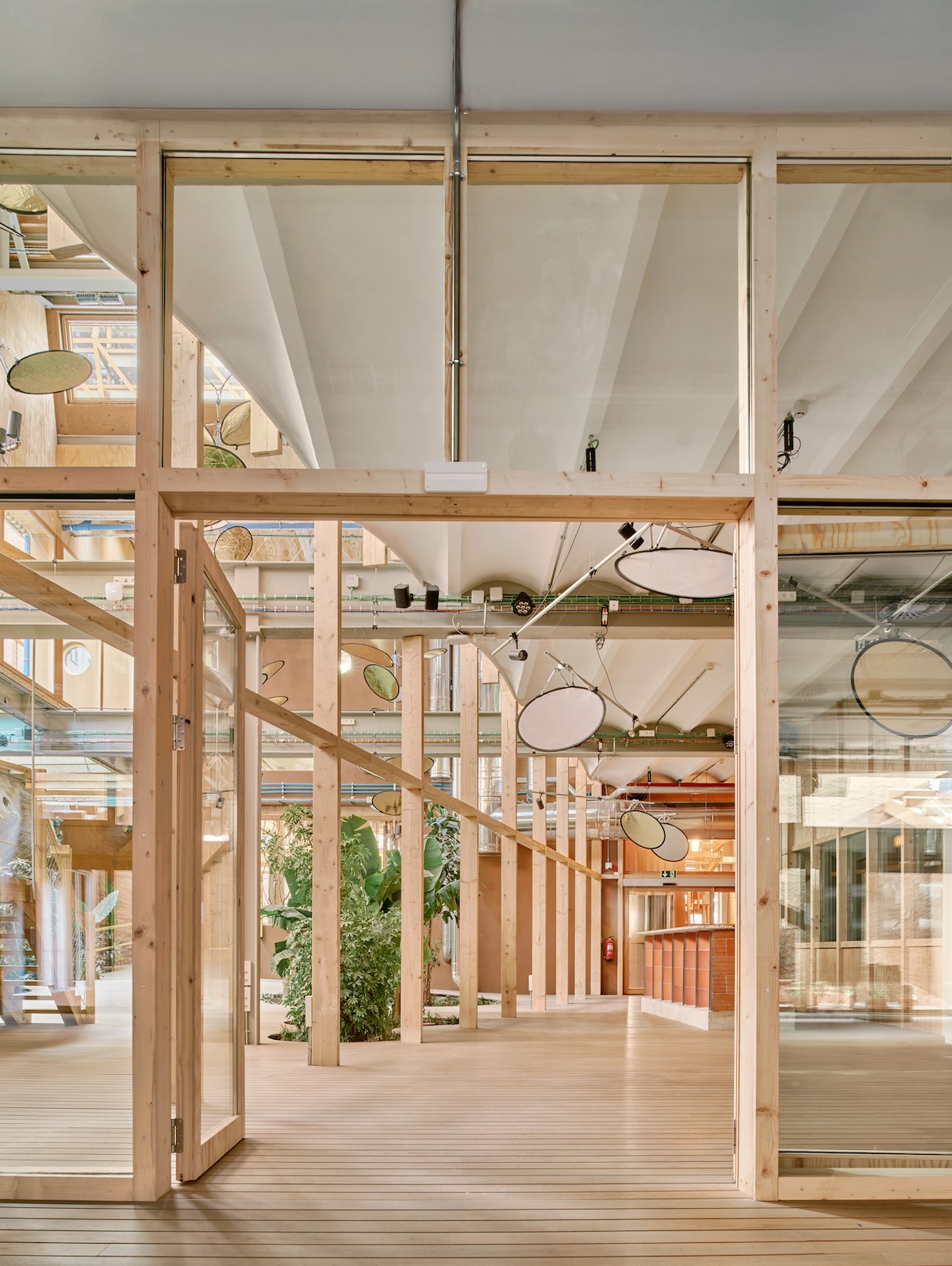
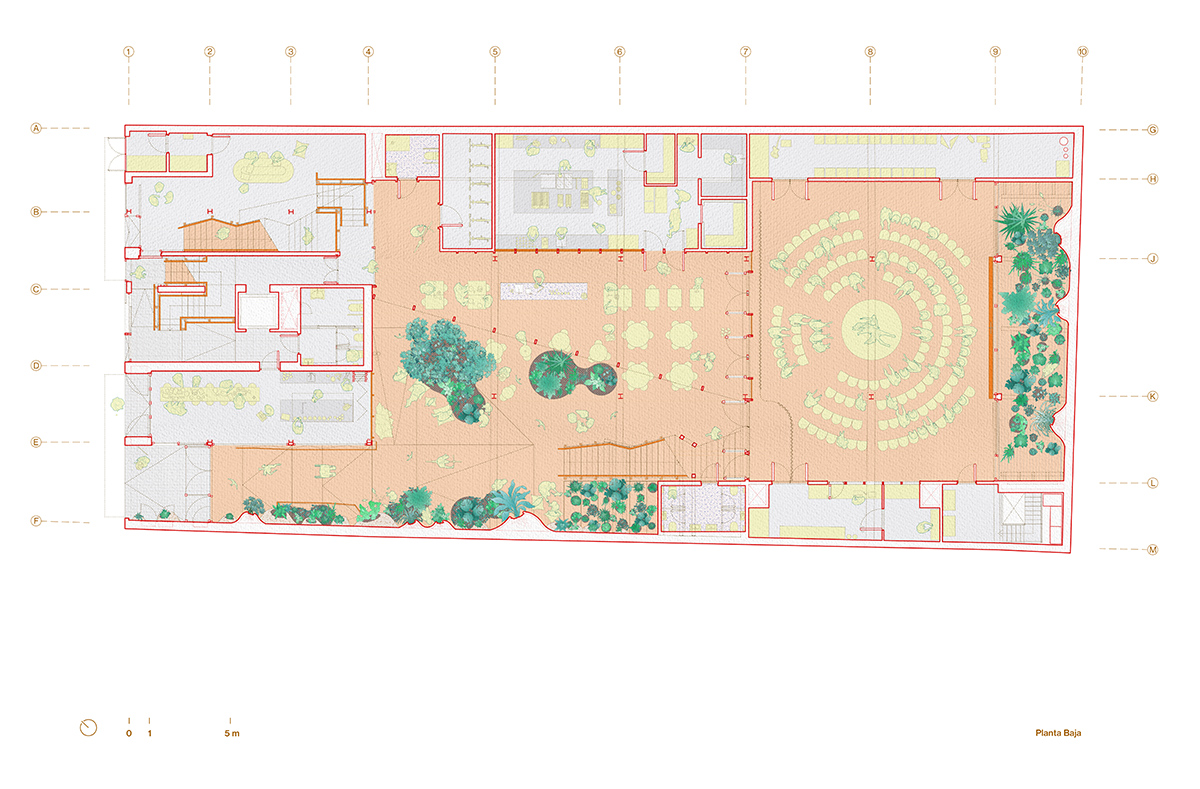
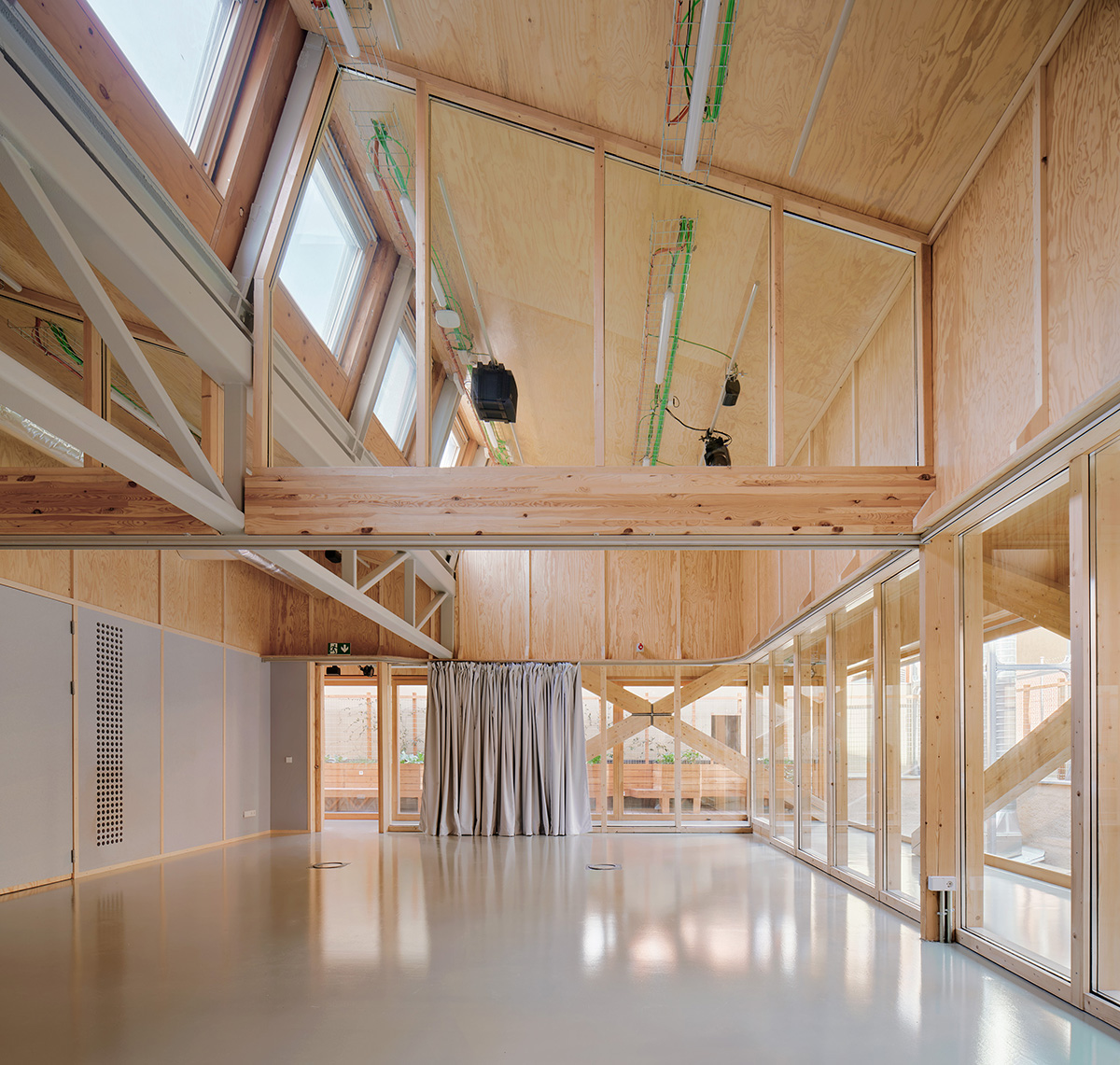
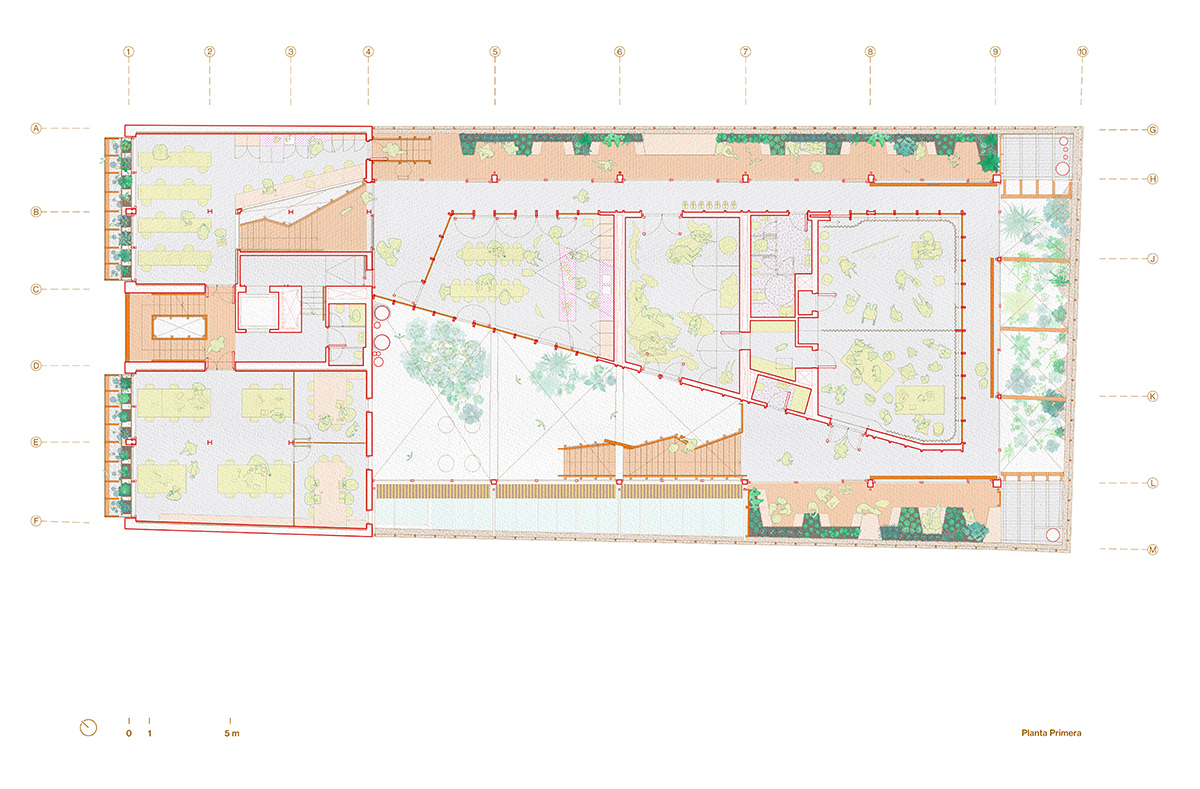
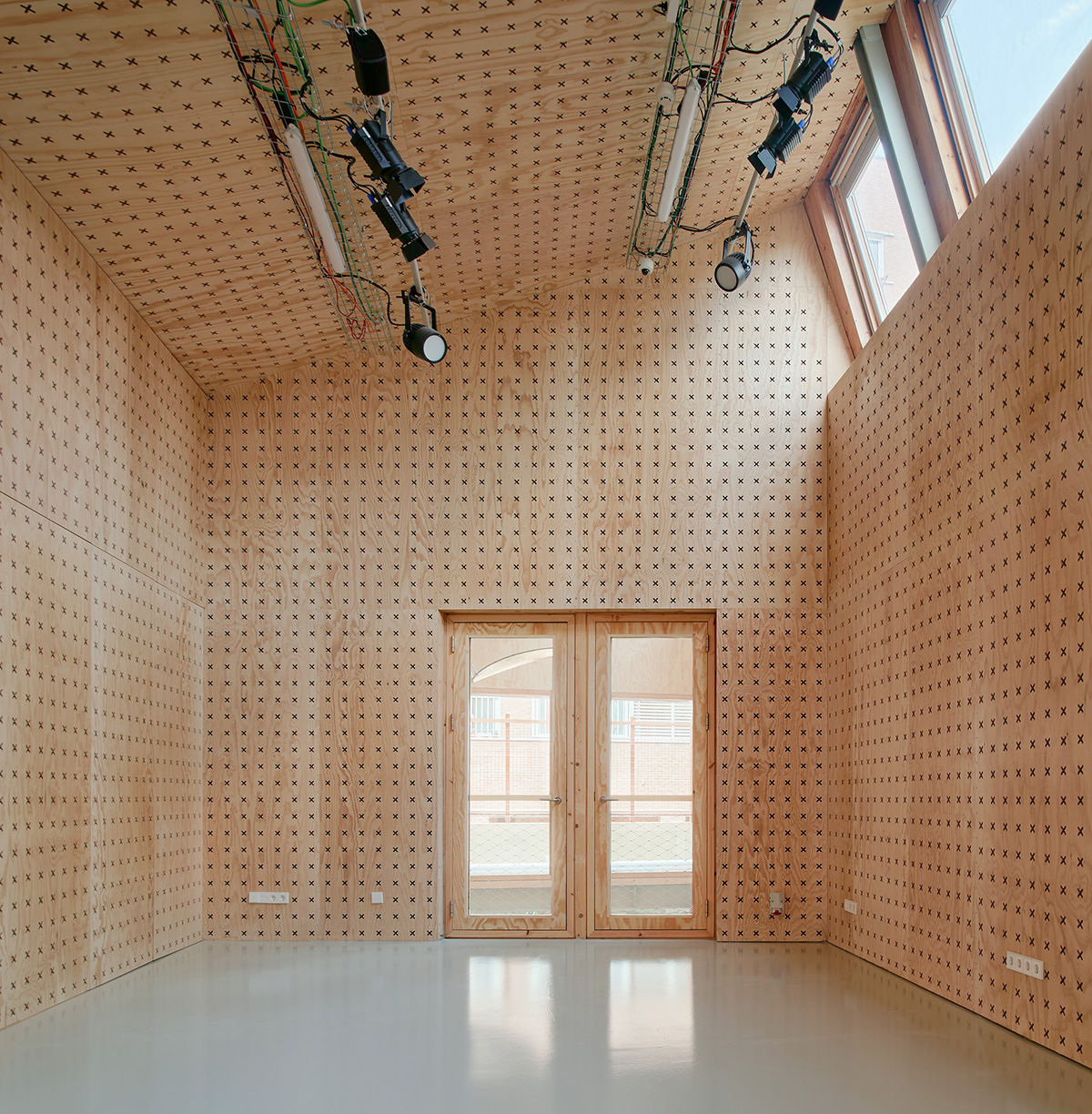
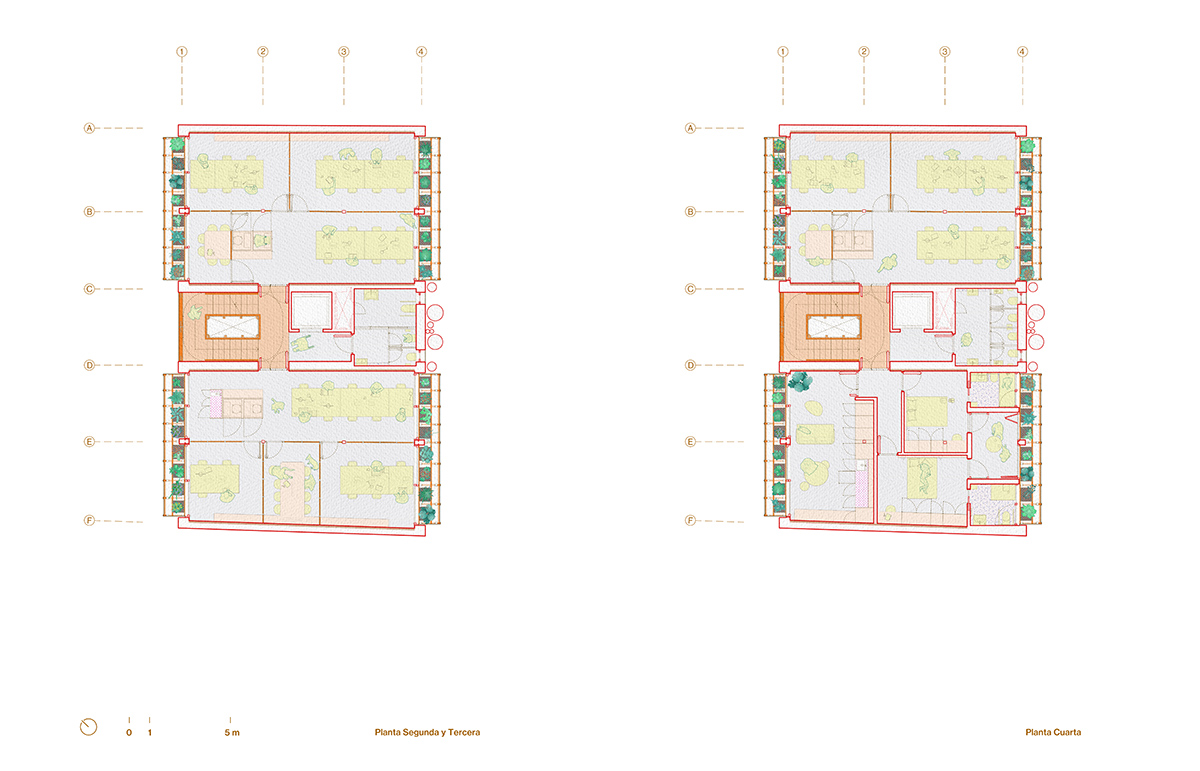
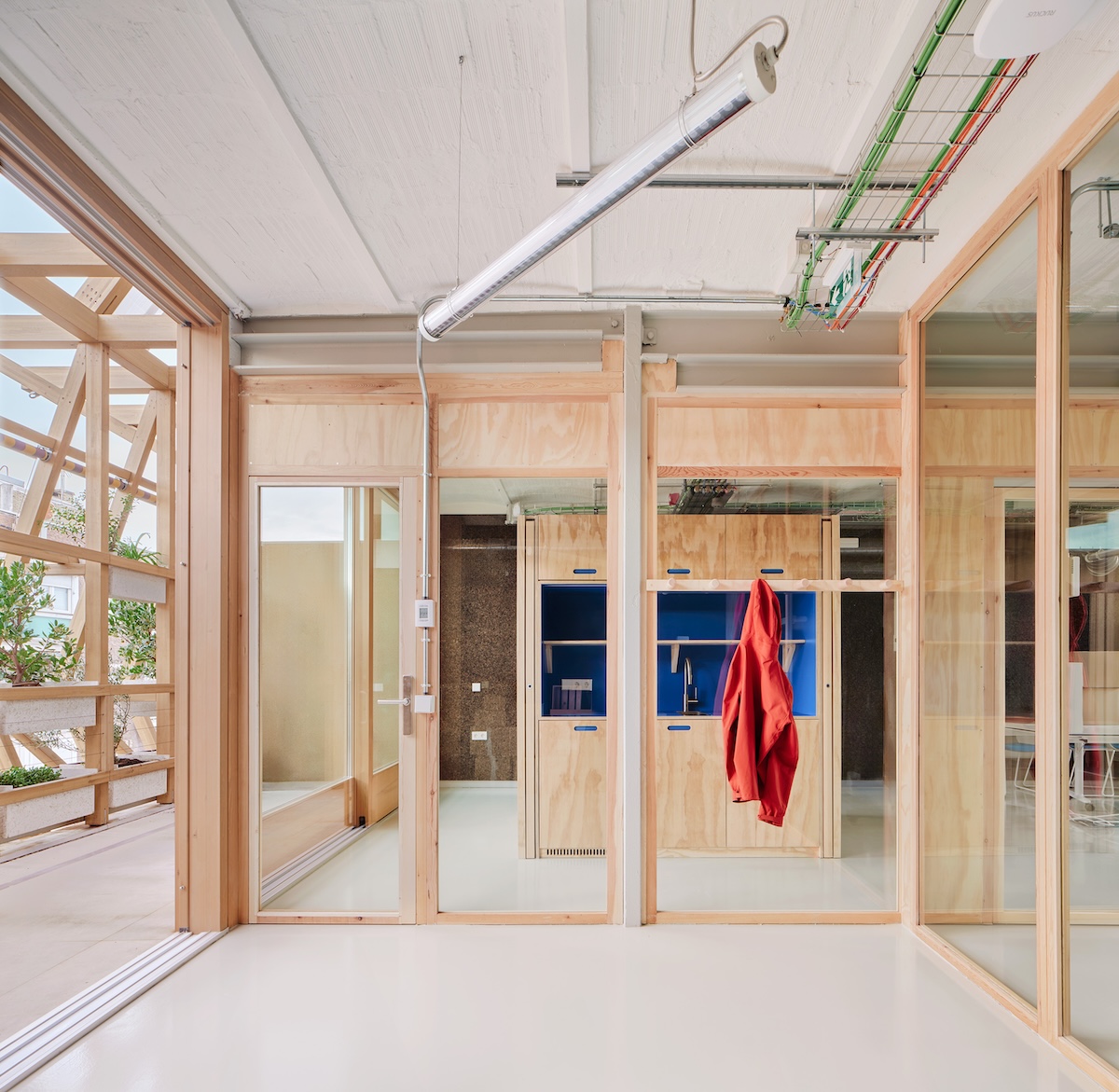
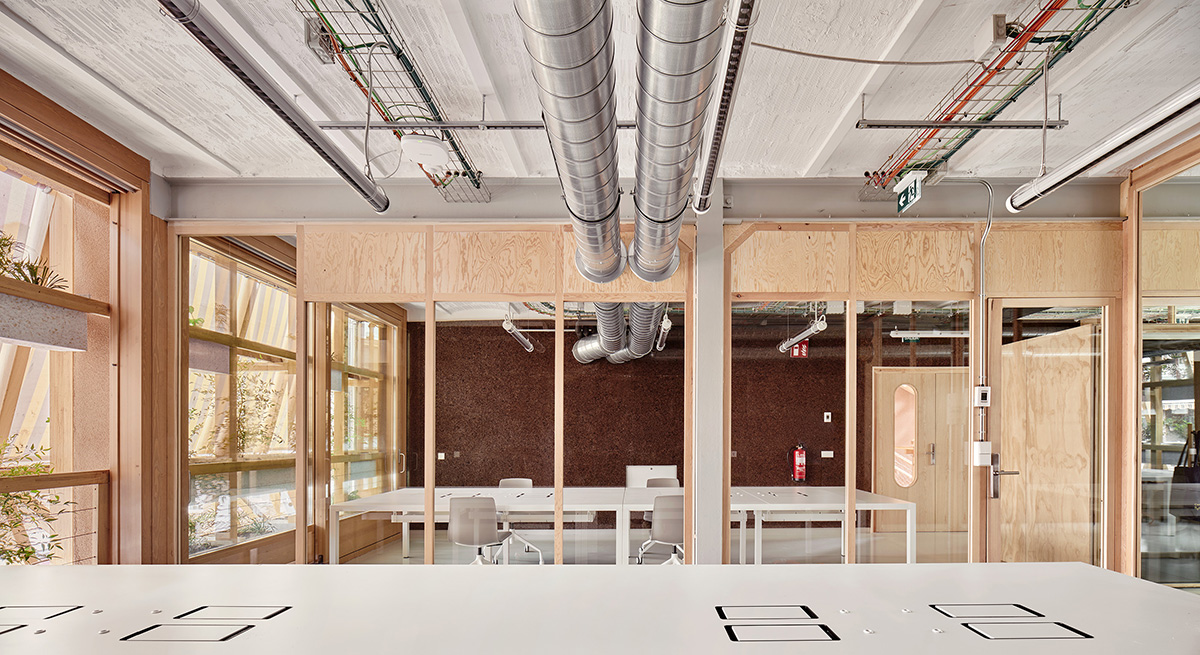
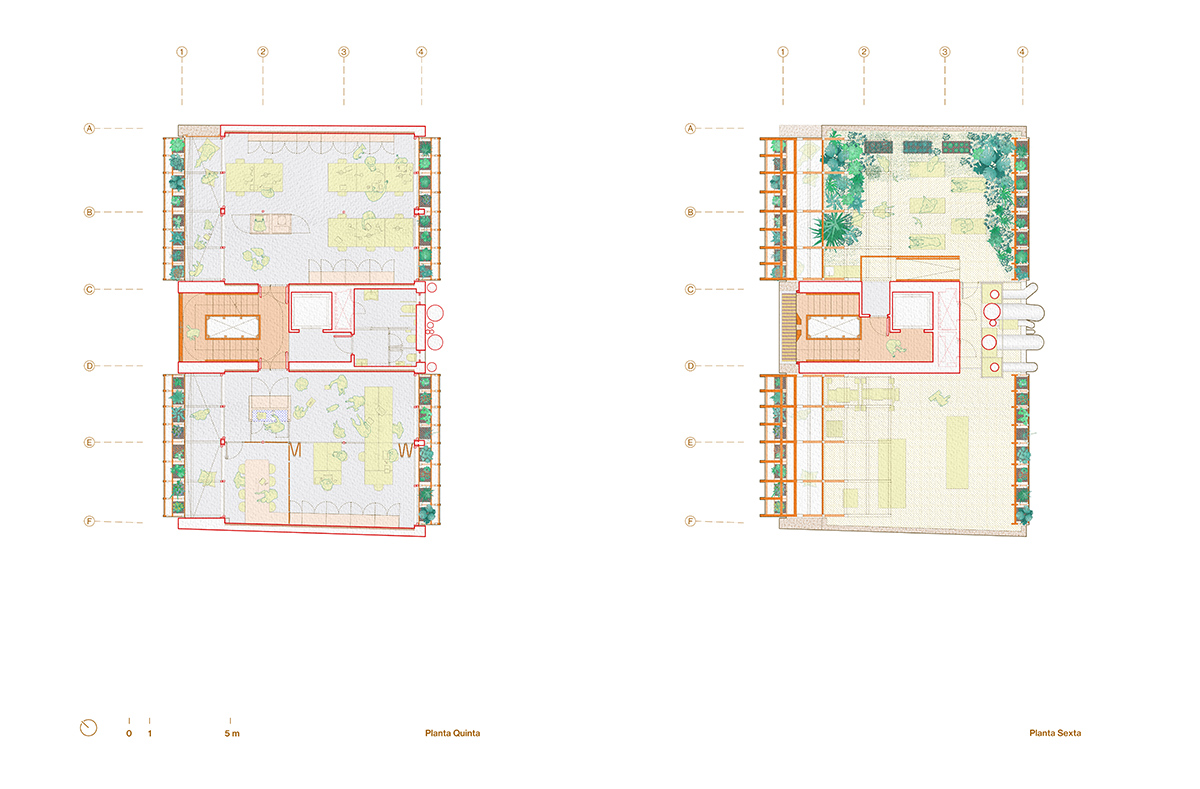
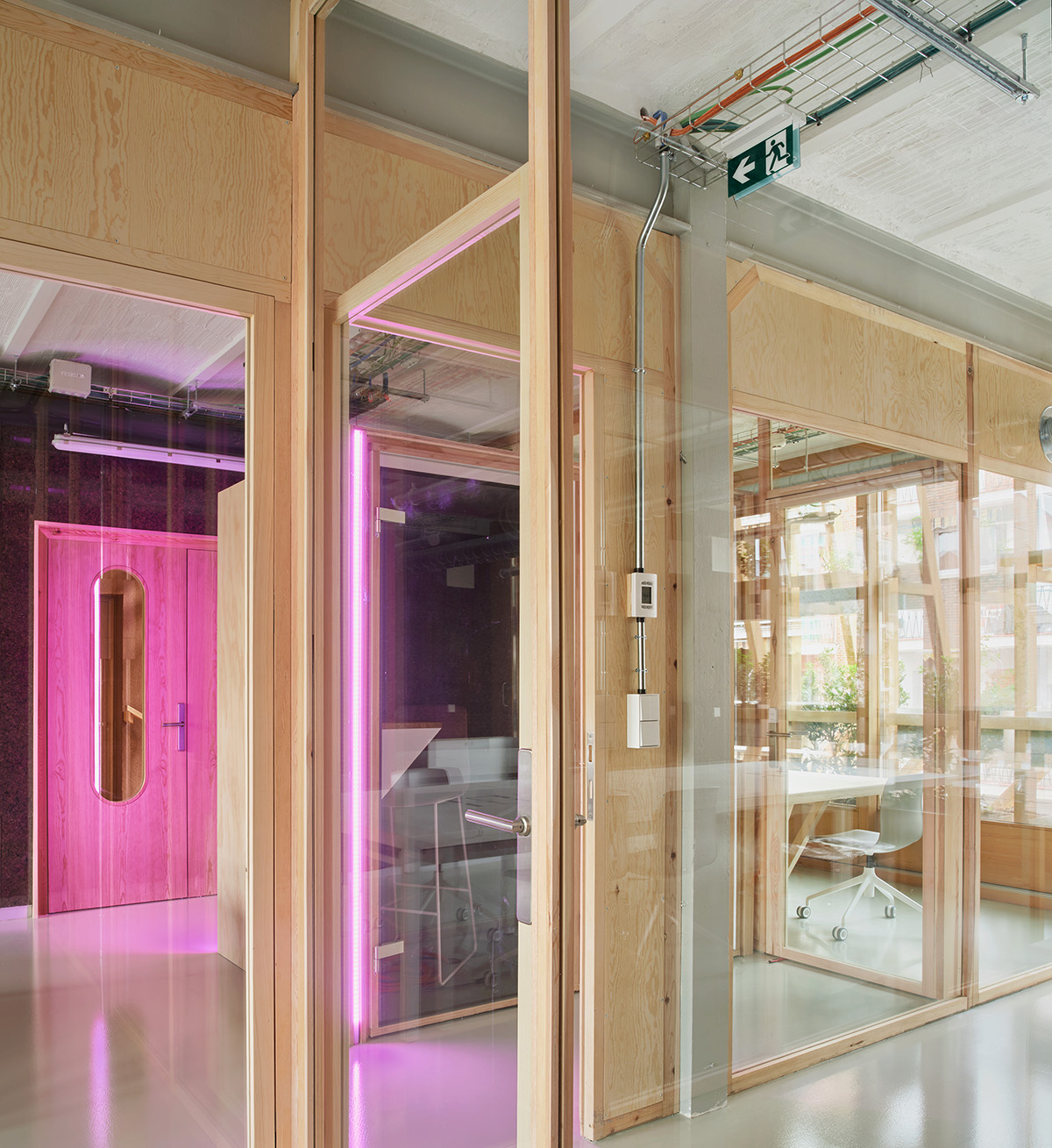
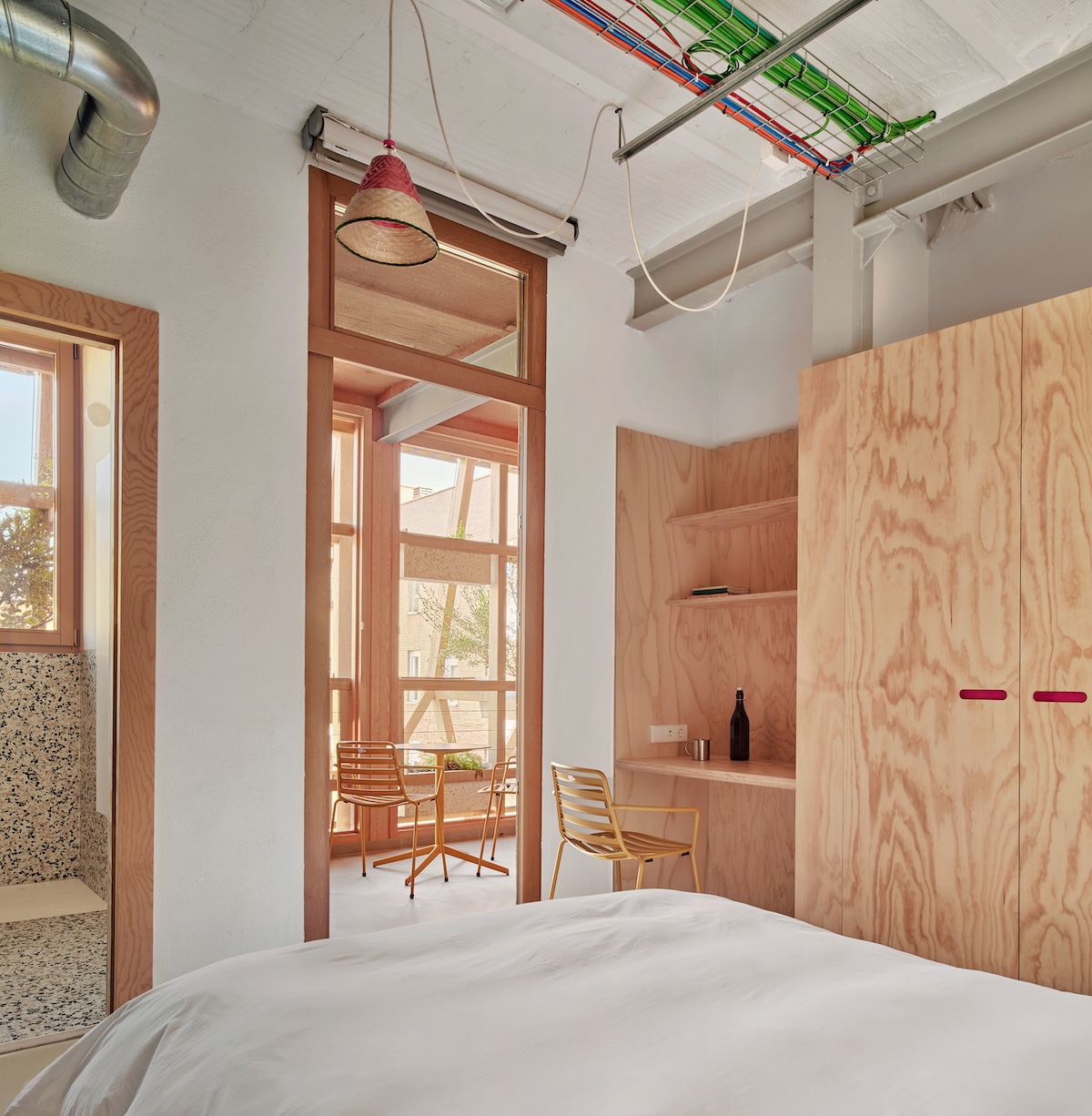
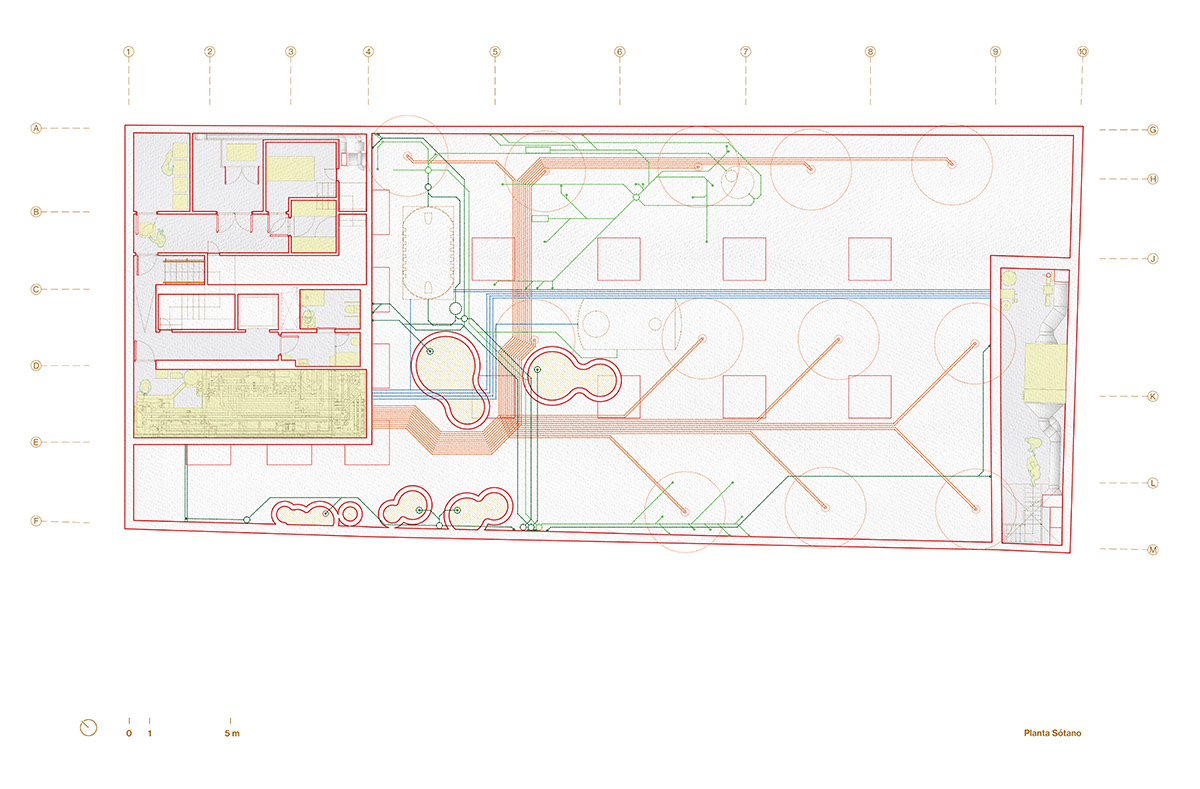
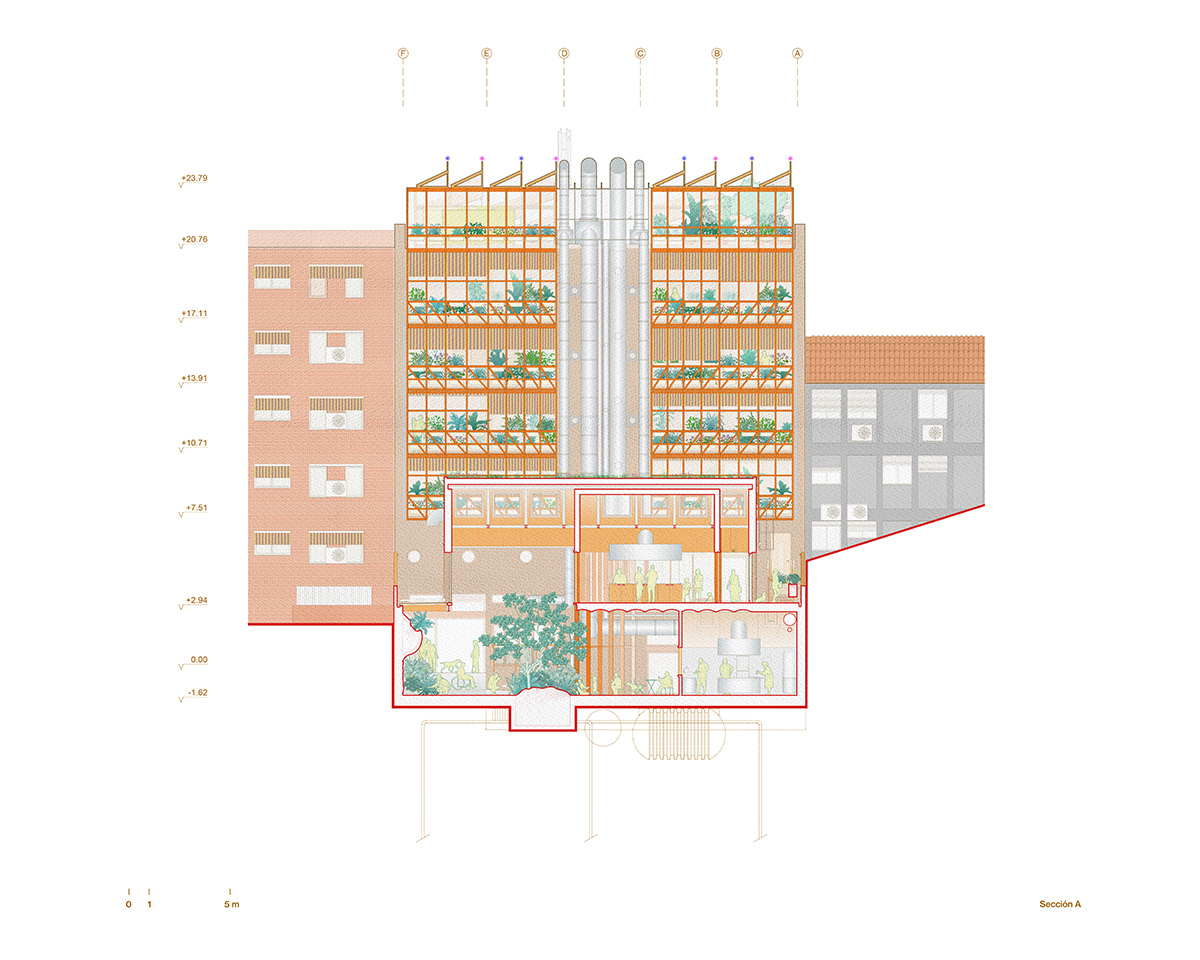
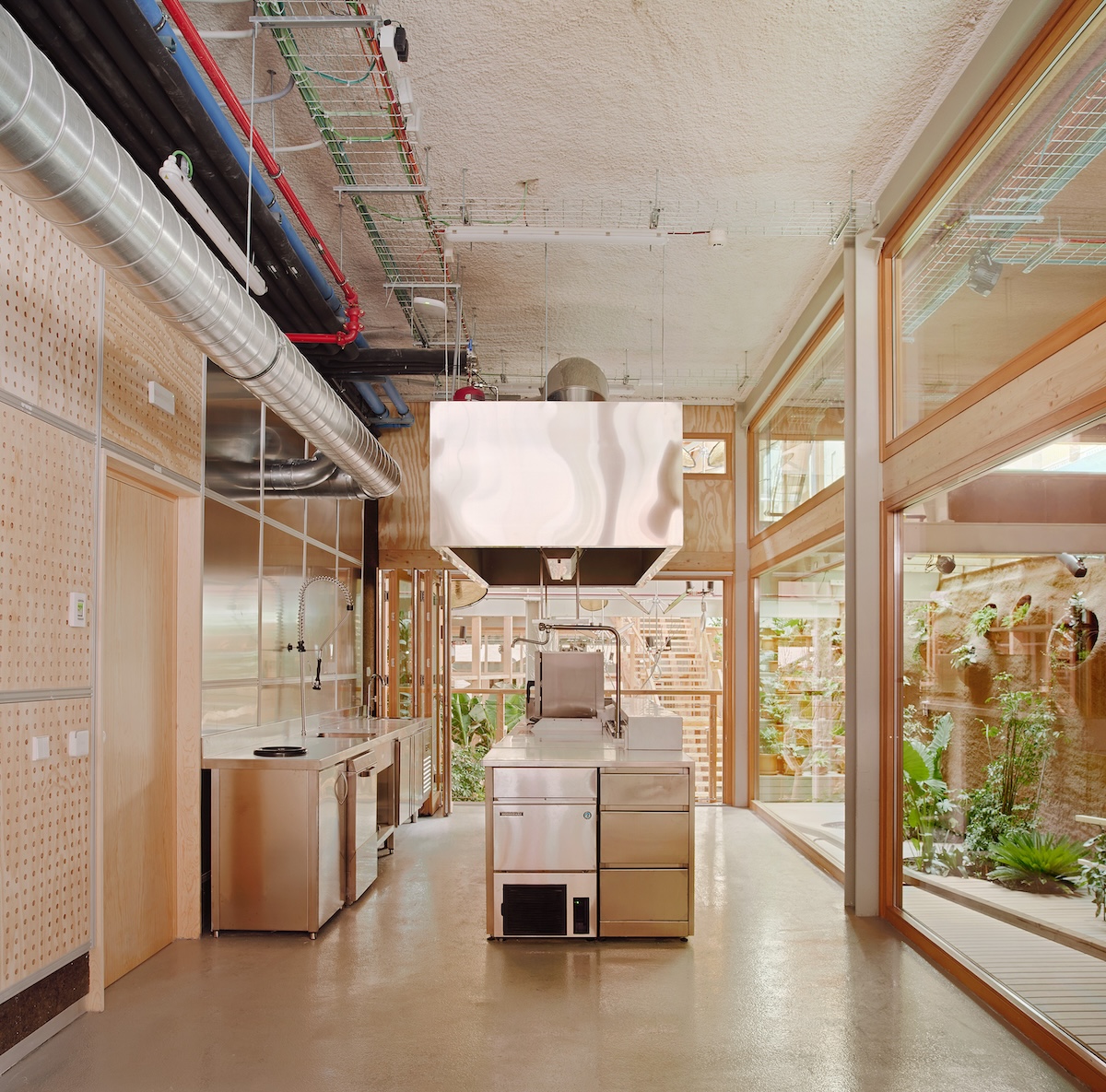
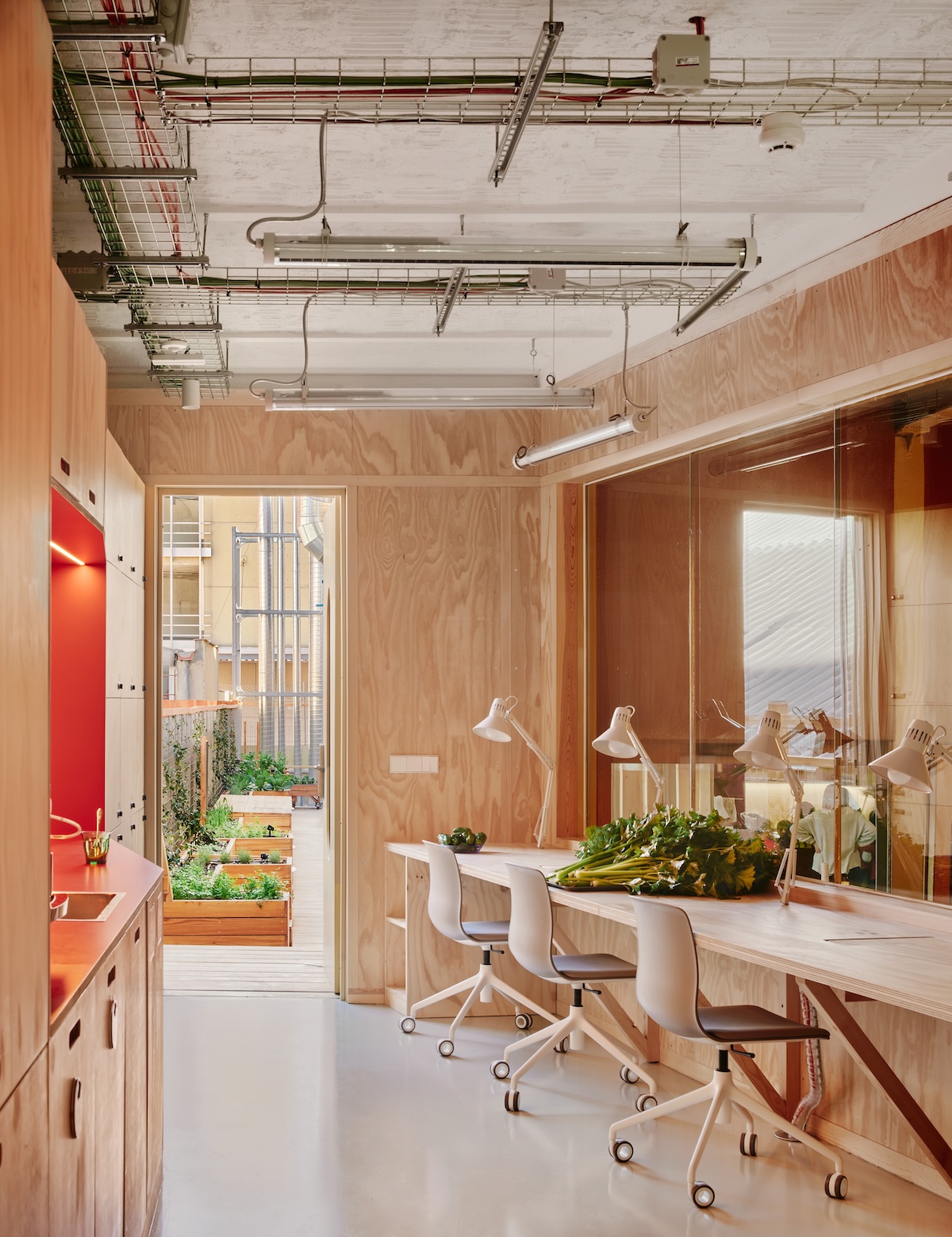
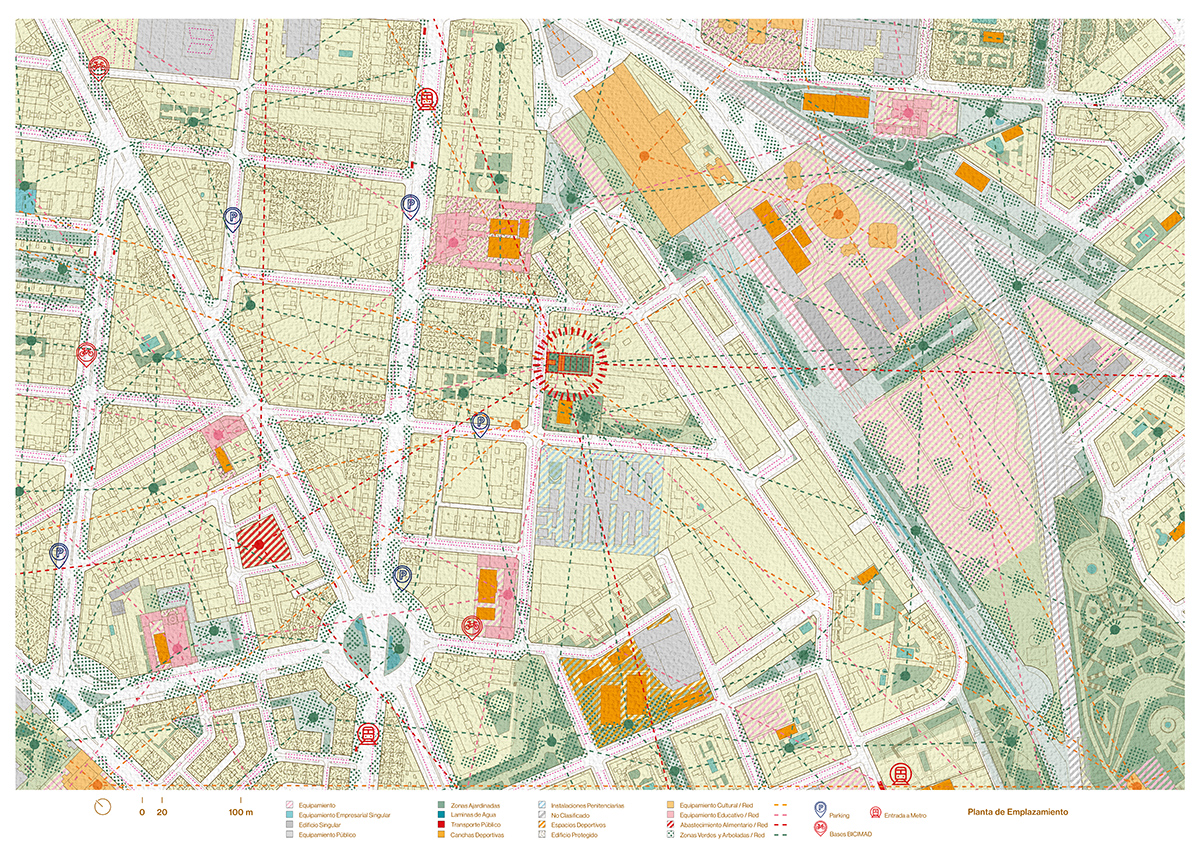
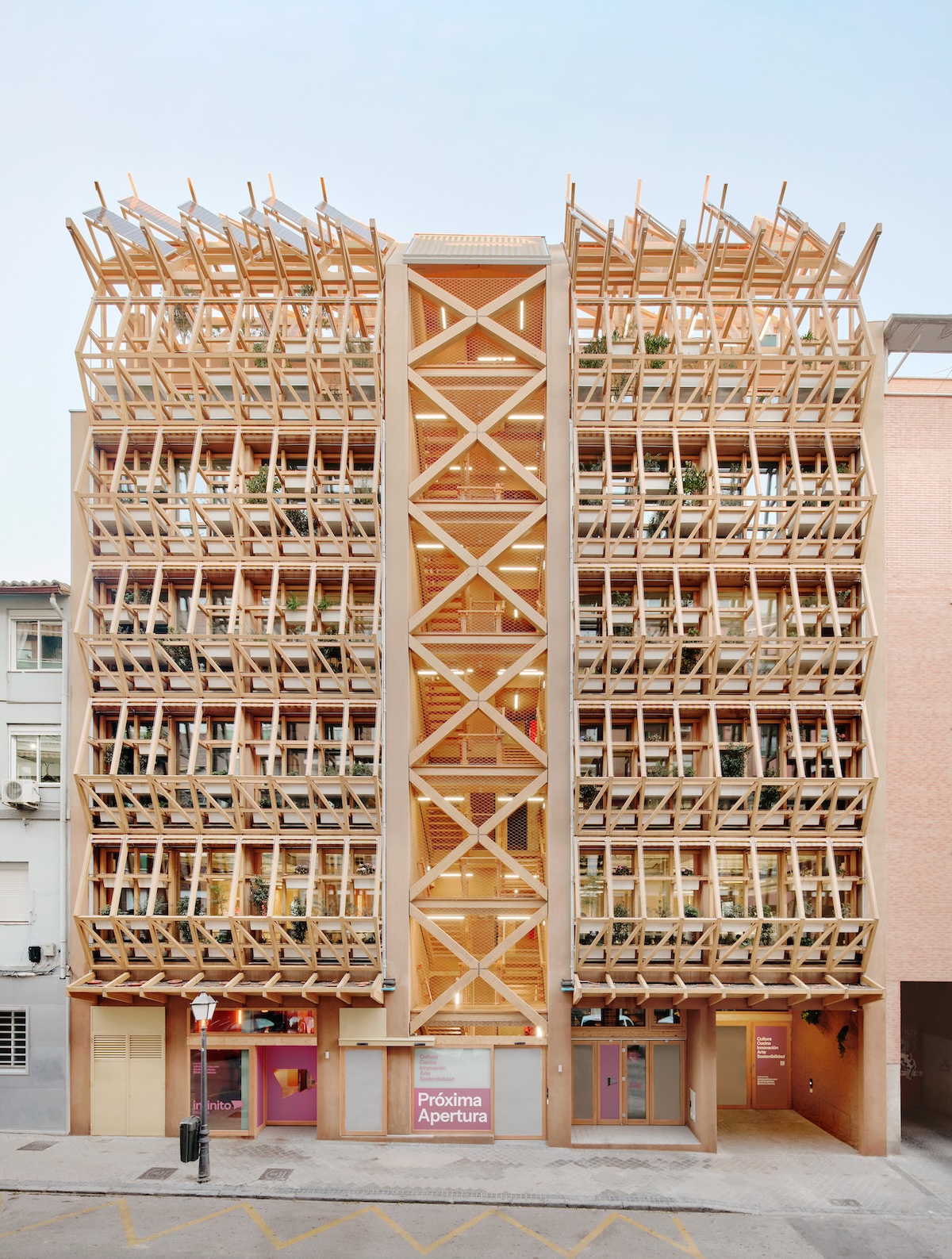
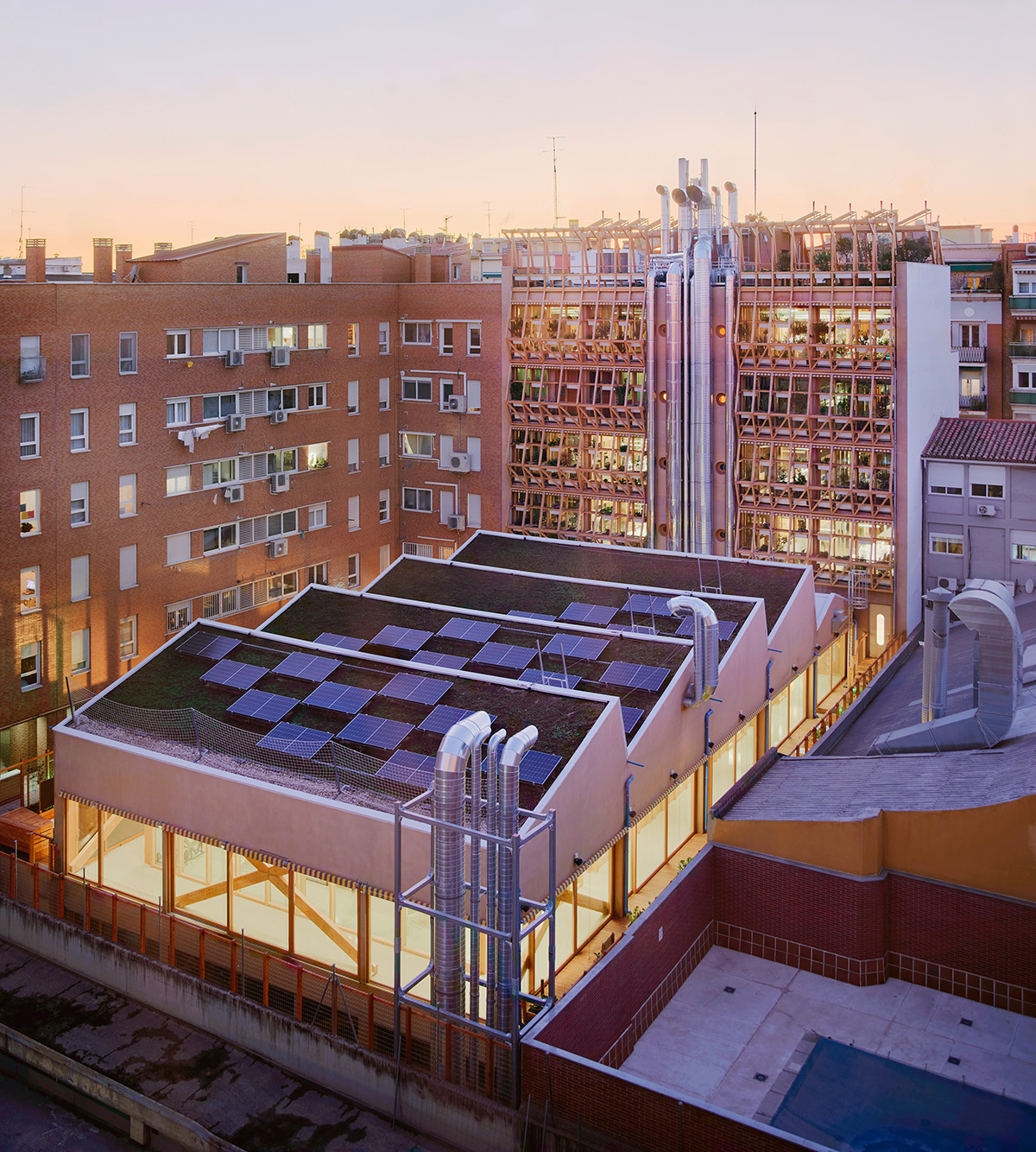
Comprehensive renovation of a former industrial building in Madrid with the aim of transforming it into a socially and ecologically exemplary construction. It was promoted by the Daniel and Nina Carasso Foundation. The project involves an old metal working factory with a singular typology: a six-story block facing the street and two stacked industrial sheds located at the rear of the urban block. The building is conceived as a space that can accommodate urban actors linked to “sustainable food” and “citizen art” (the two main lines of action of the Foundation), while also contributing to the “composition of knowledges” and the creation of alliances between these communities and other actors associated with other forms of knowledge who also inhabit the building. The hybrid program includes offices, multipurpose spaces, a restaurant, a studio kitchen, a culinary laboratory, a staff kitchen, residential spaces, rehearsal rooms, gardens, allotments and a central courtyard. Almost 40% of the total floor area is dedicated to collective indoor–outdoor use and is accessible to the surrounding neighbourhood.
The architectural project is based on the following strategies:
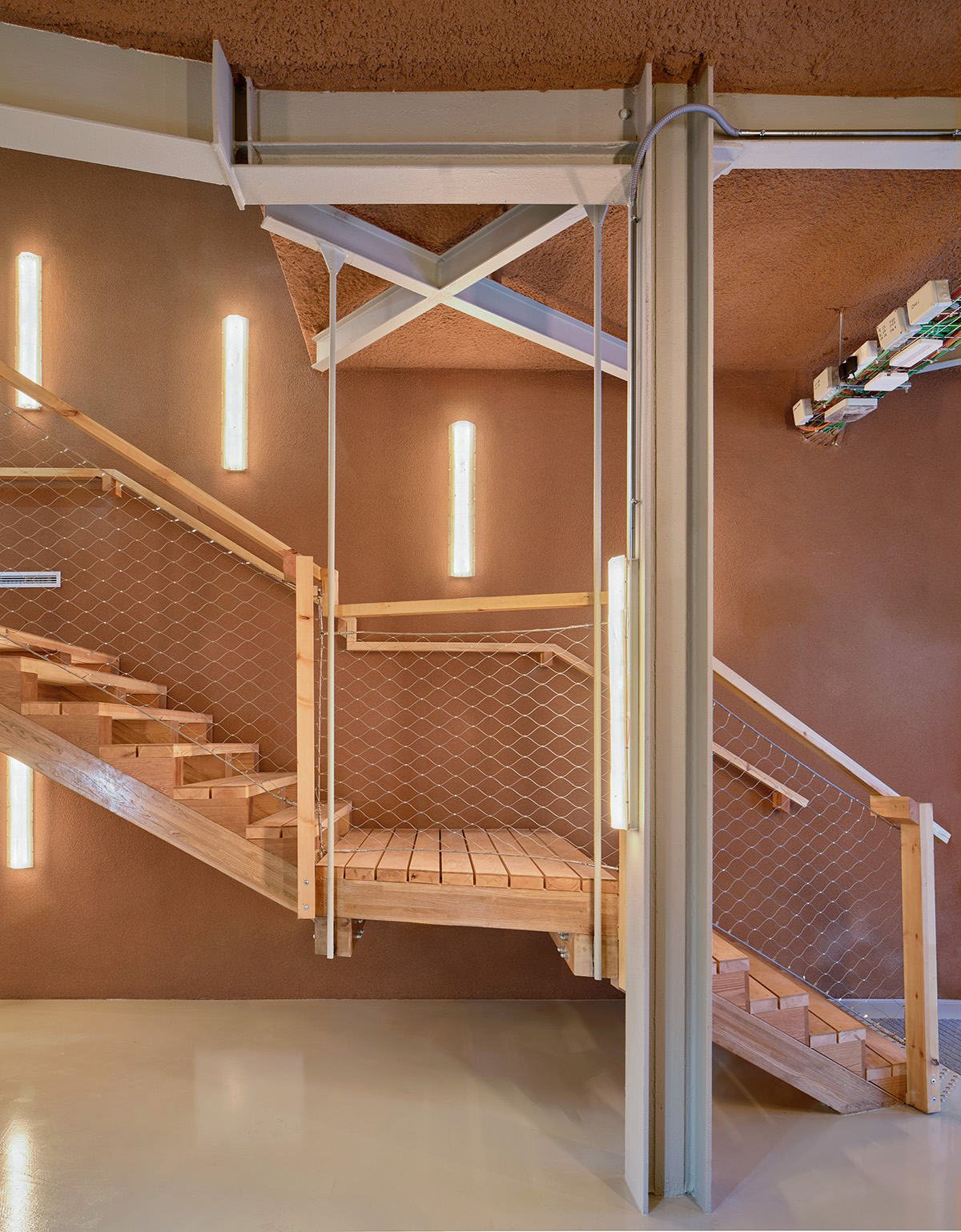
- Preserving and restoring as many elements of the existing structure as possible, enhancing Madrid’s industrial heritage and making use of the building’s embodied energy.
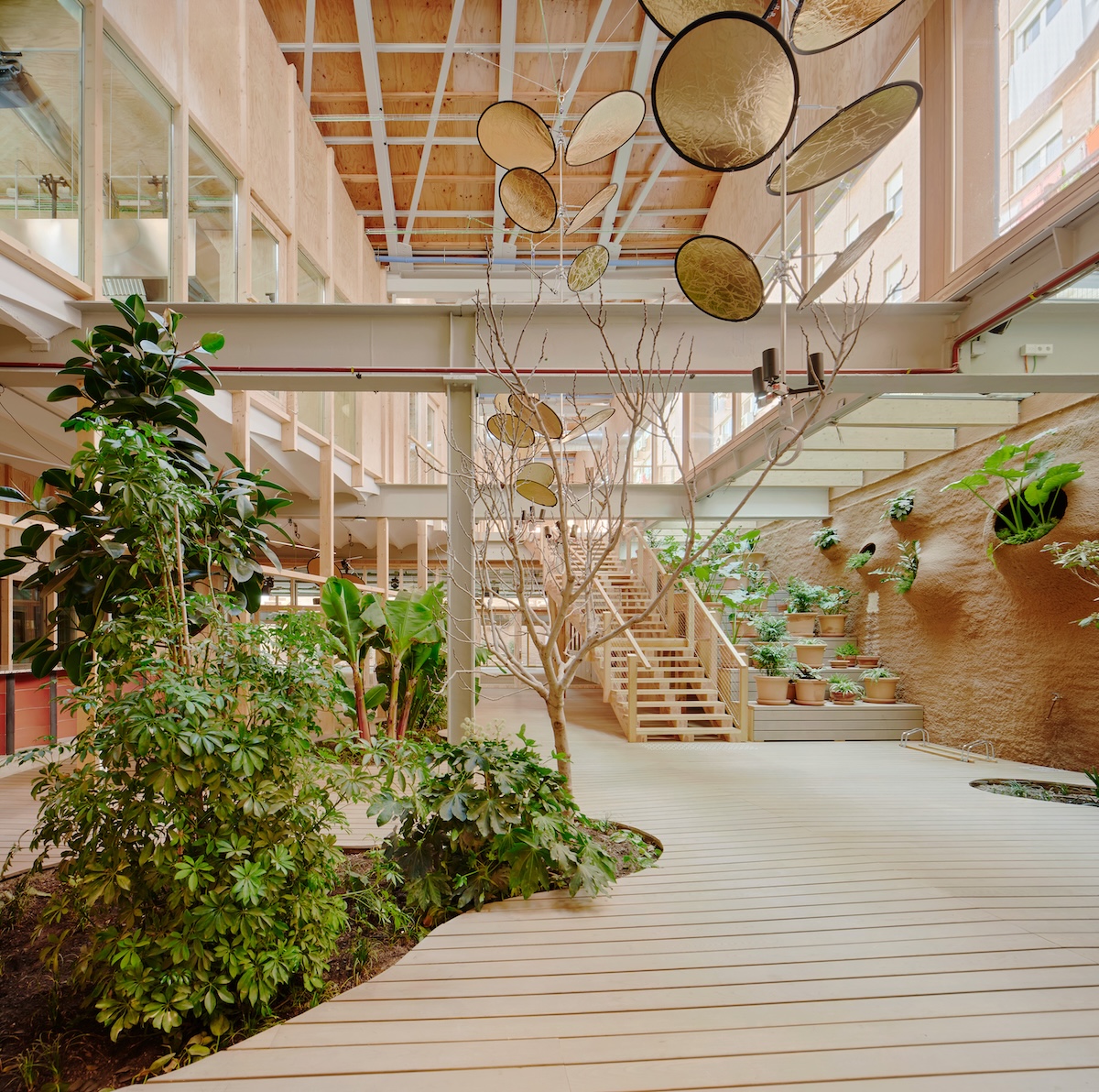
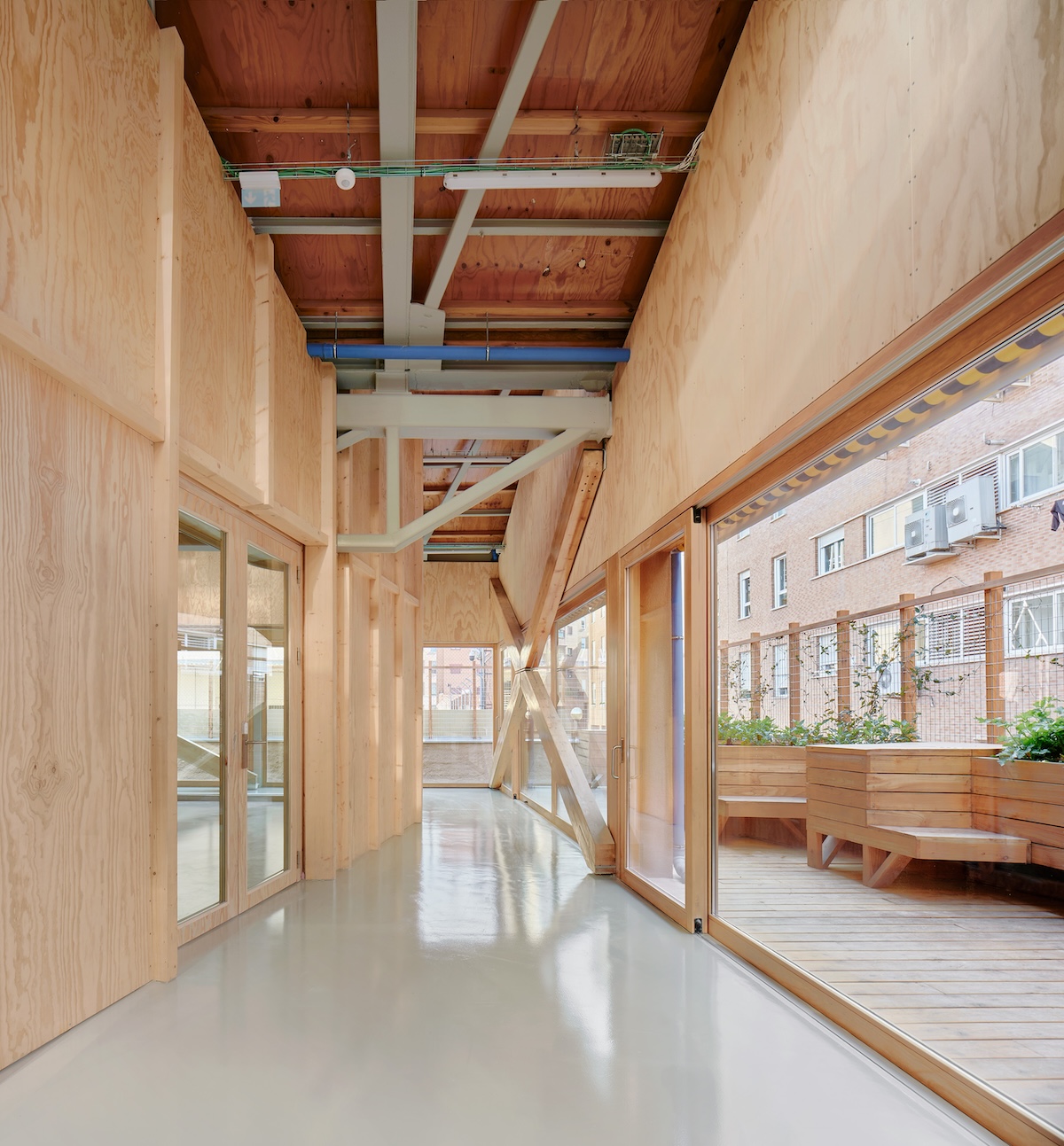
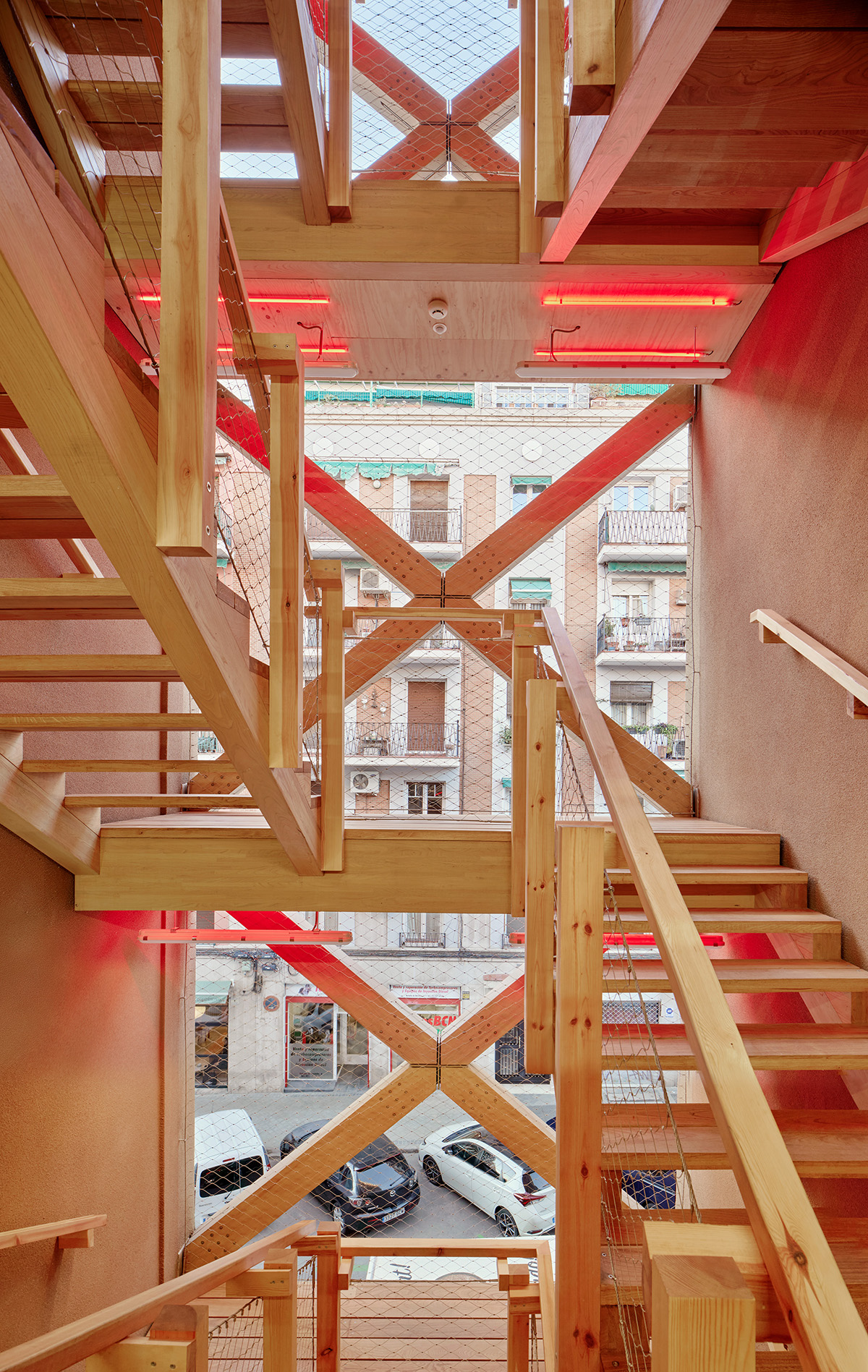
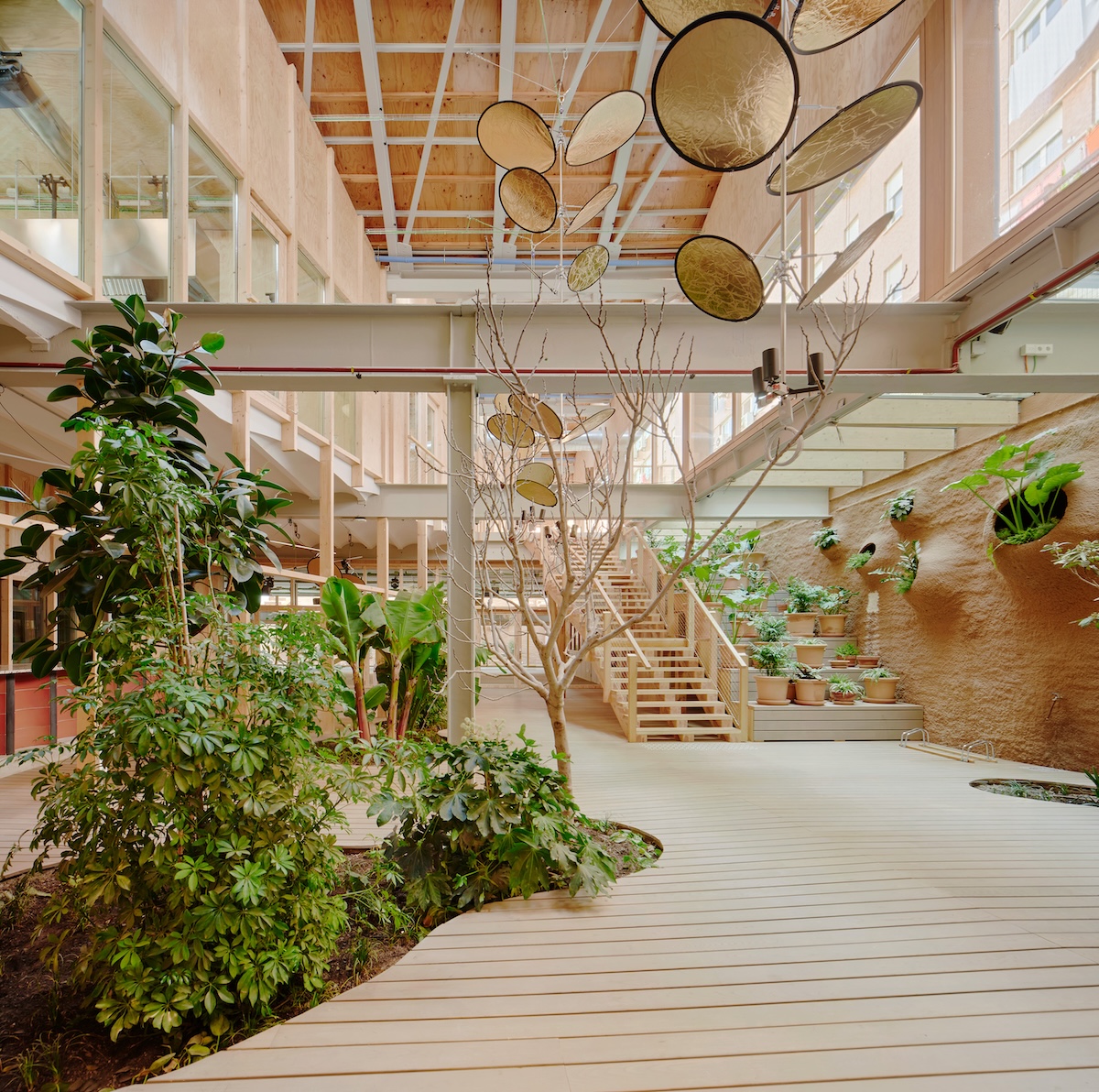
- Reorganizing circulation through a circuit of indoor–outdoor spaces arranged as a peripheral “ring”, ensuring accessibility and permeability between the different uses within the building and between the building and the neighbourhood.
- Building, wherever possible, using biomaterials (locally sourced timber, cork, lime mortars, etc.), recycled materials or materials with low environmental impact, based on life-cycle assessment and the ecological performance of each material. In this way, a logic of material circularity is pursued.
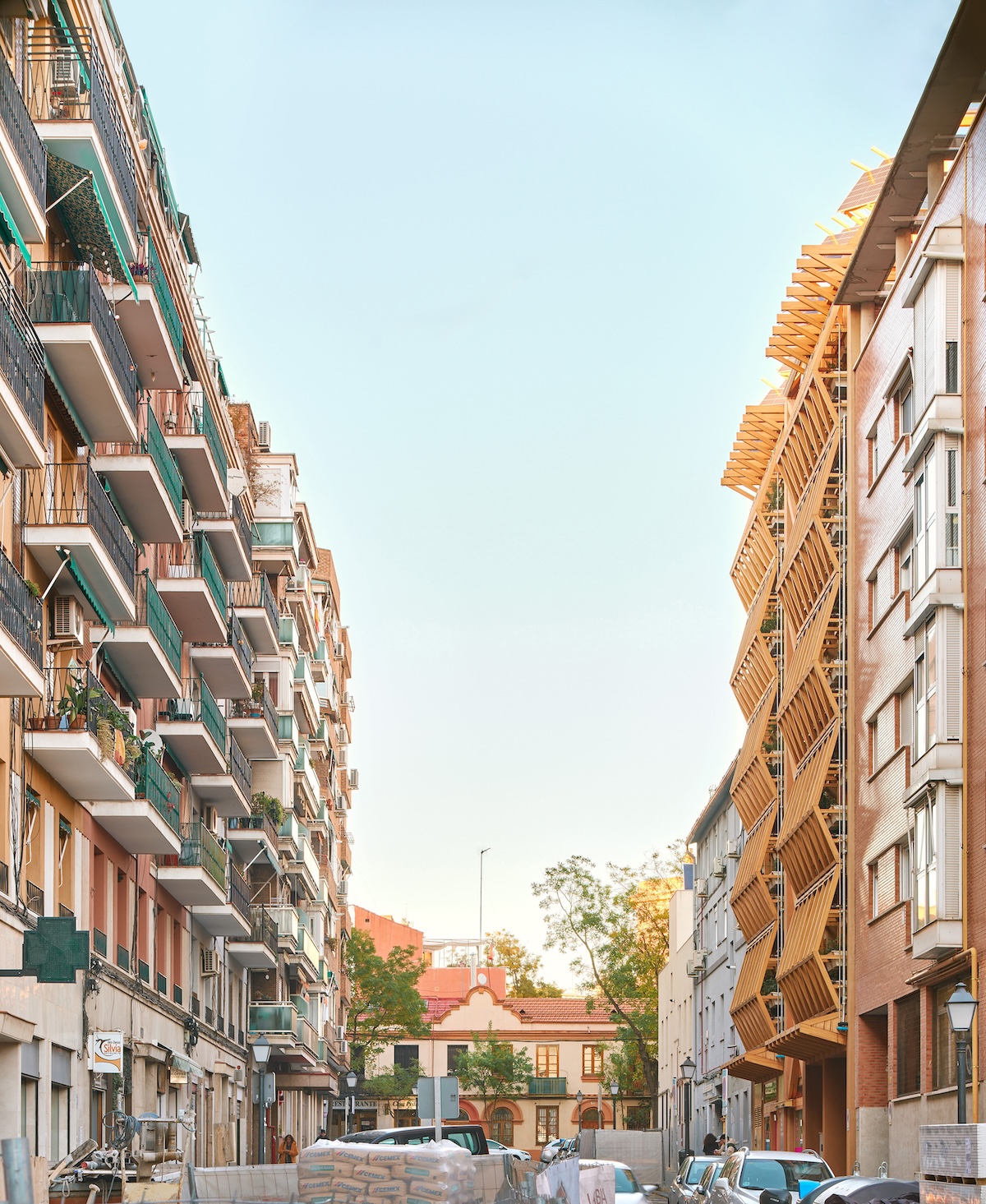
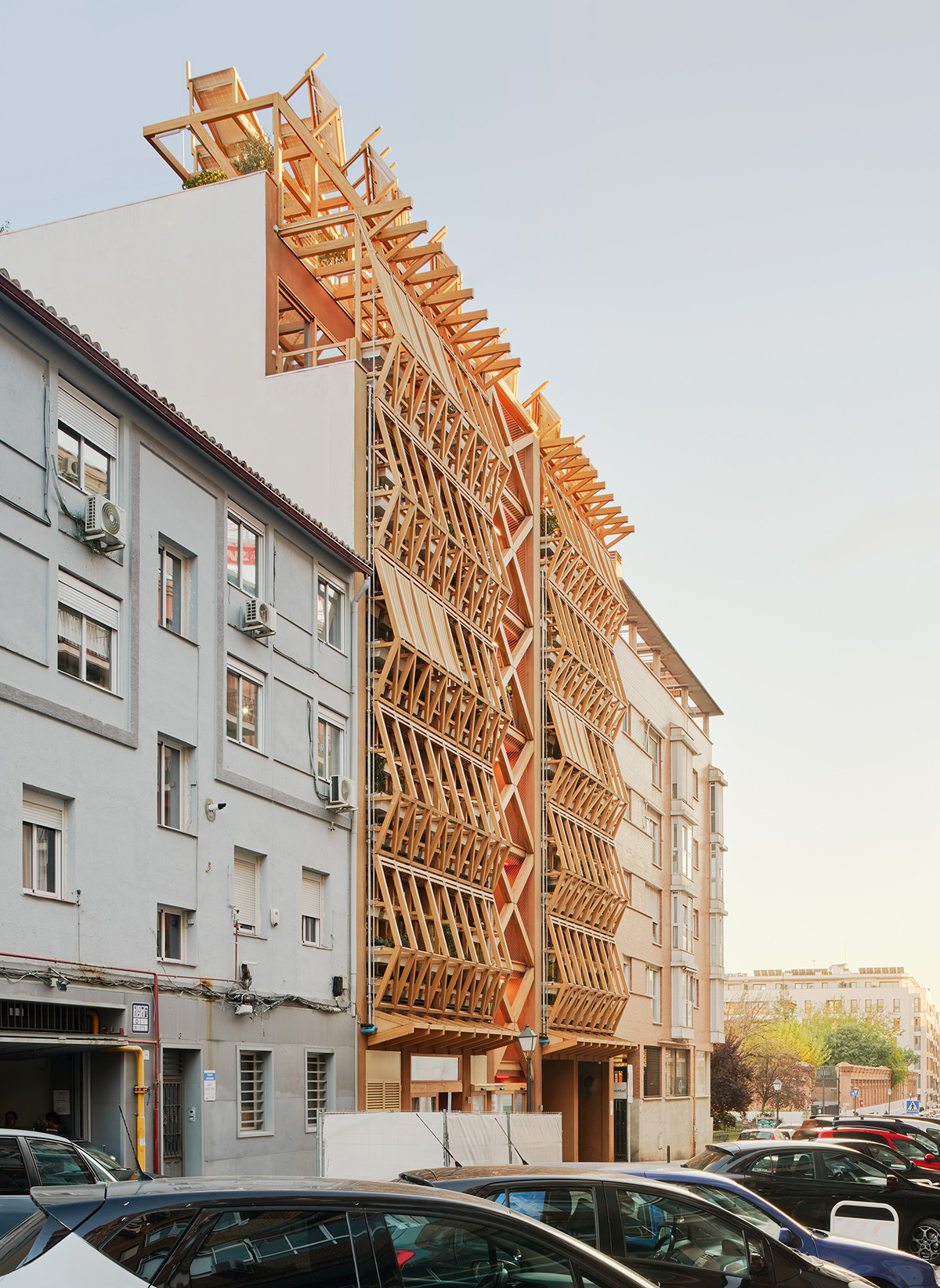
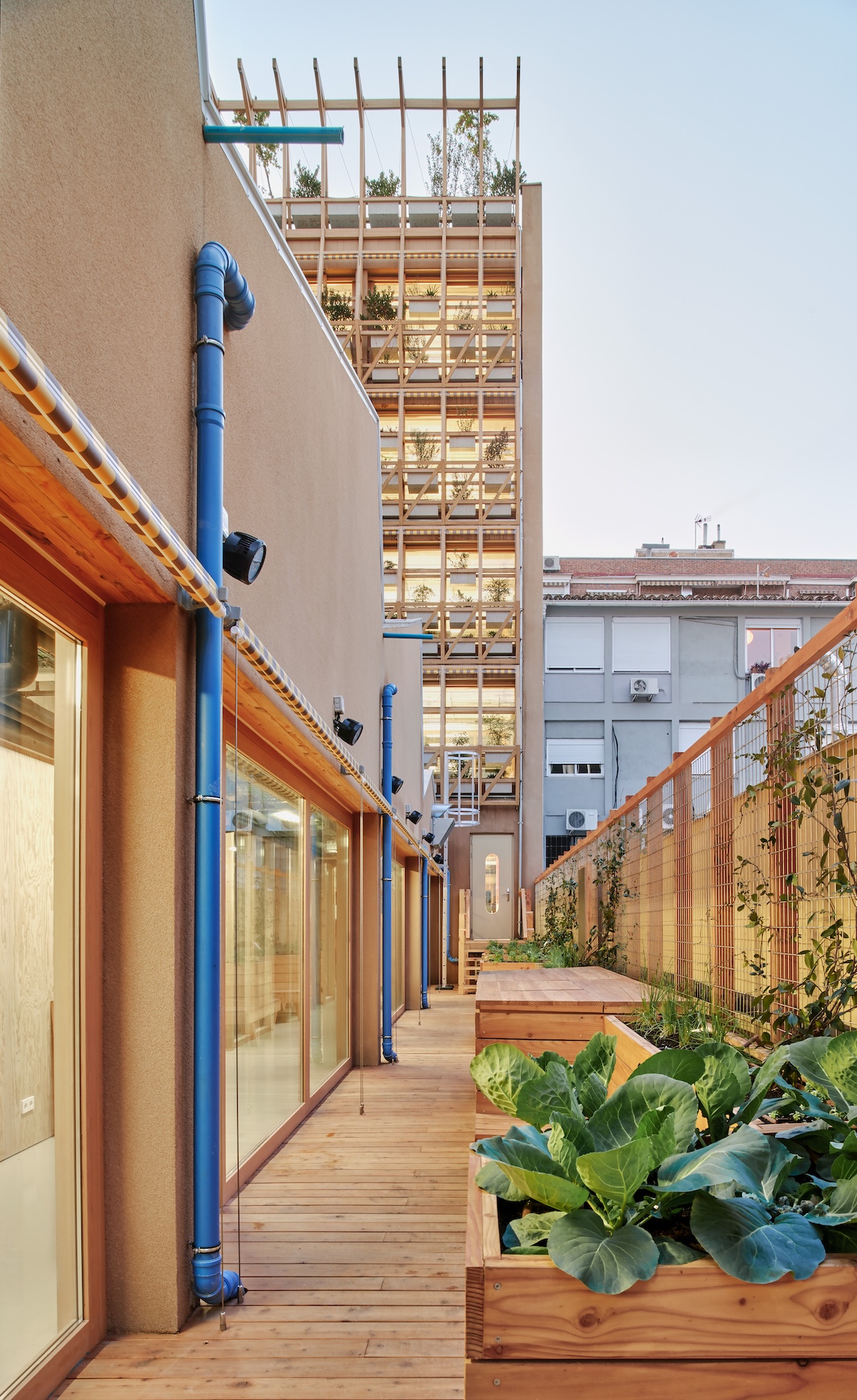
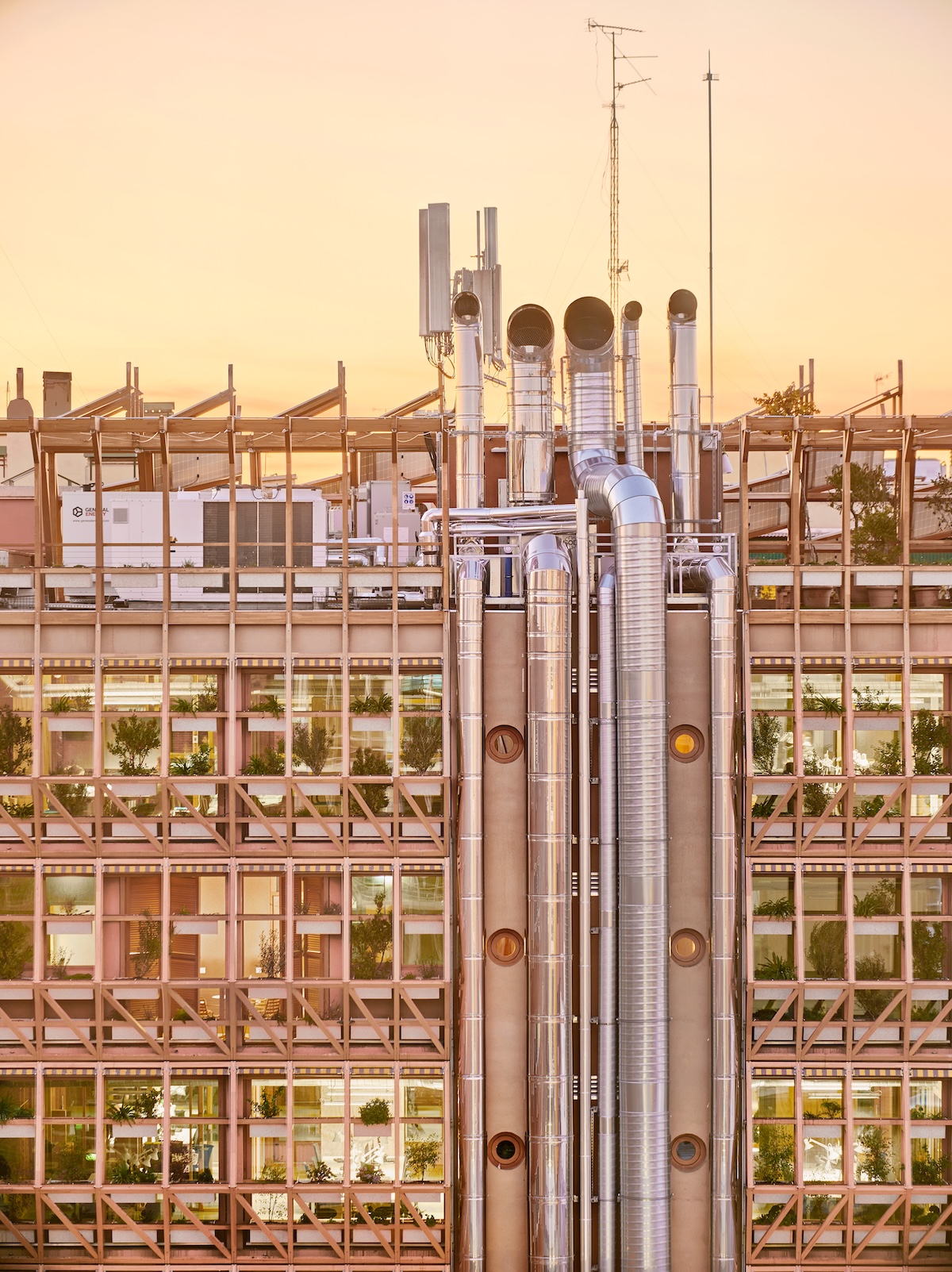
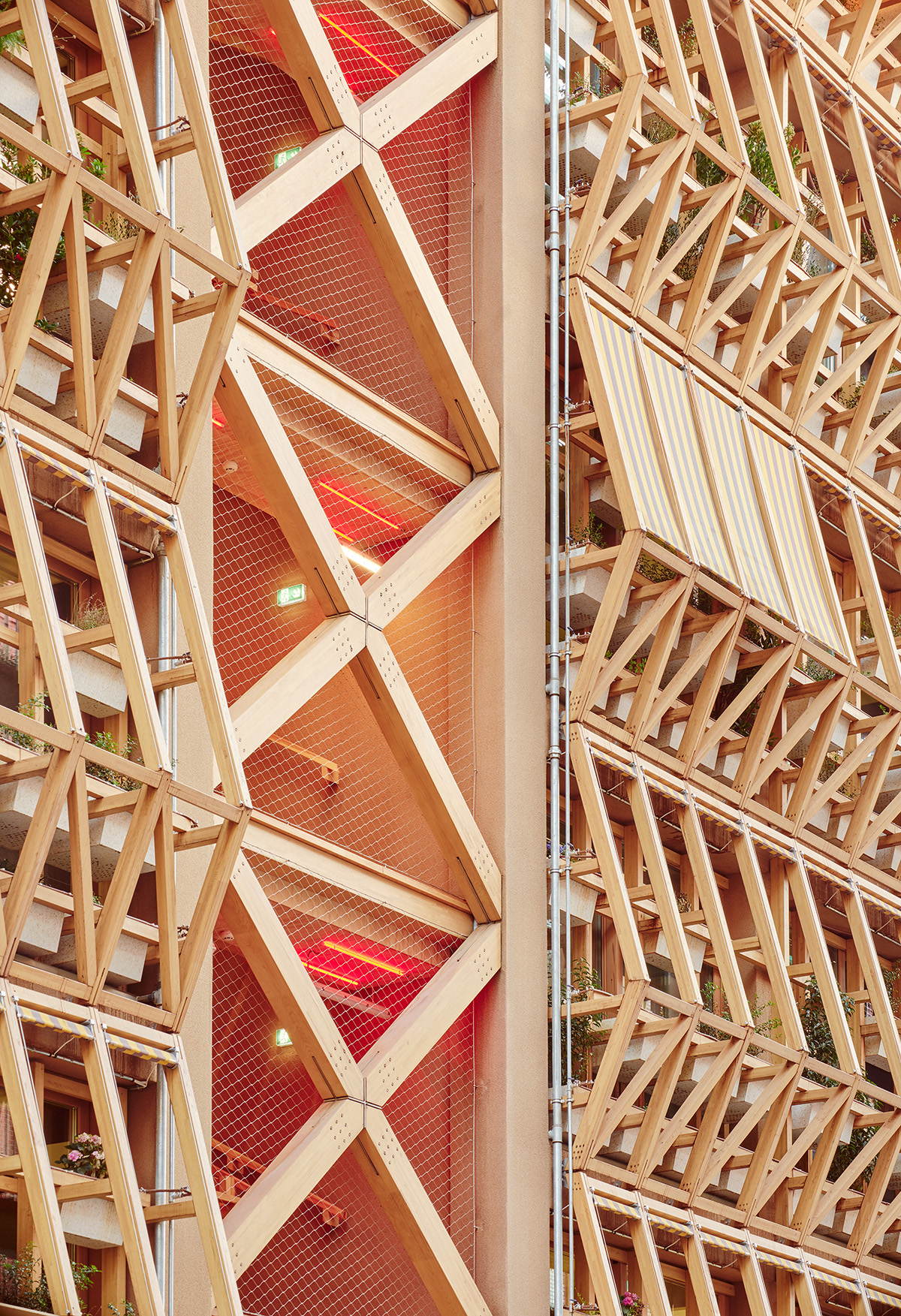
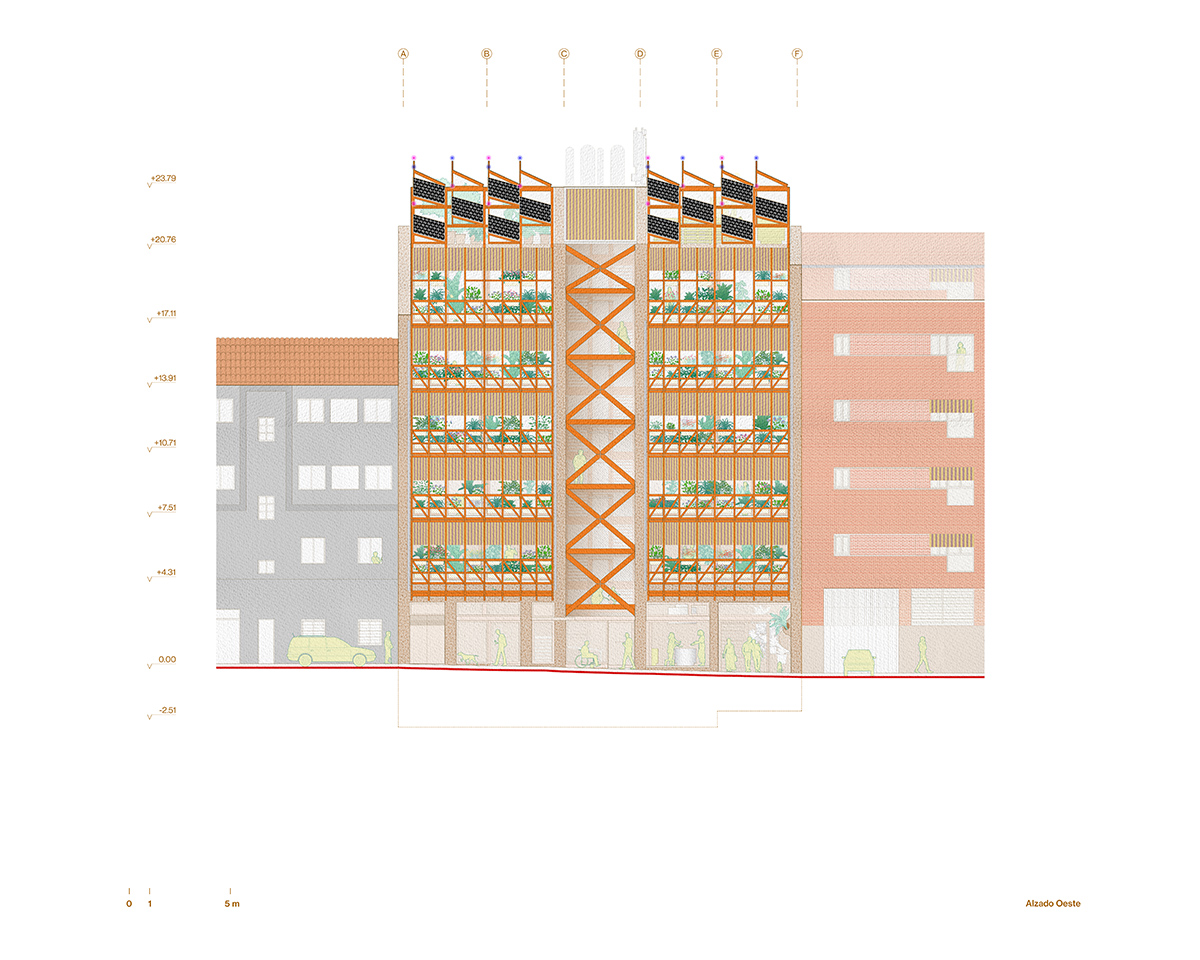
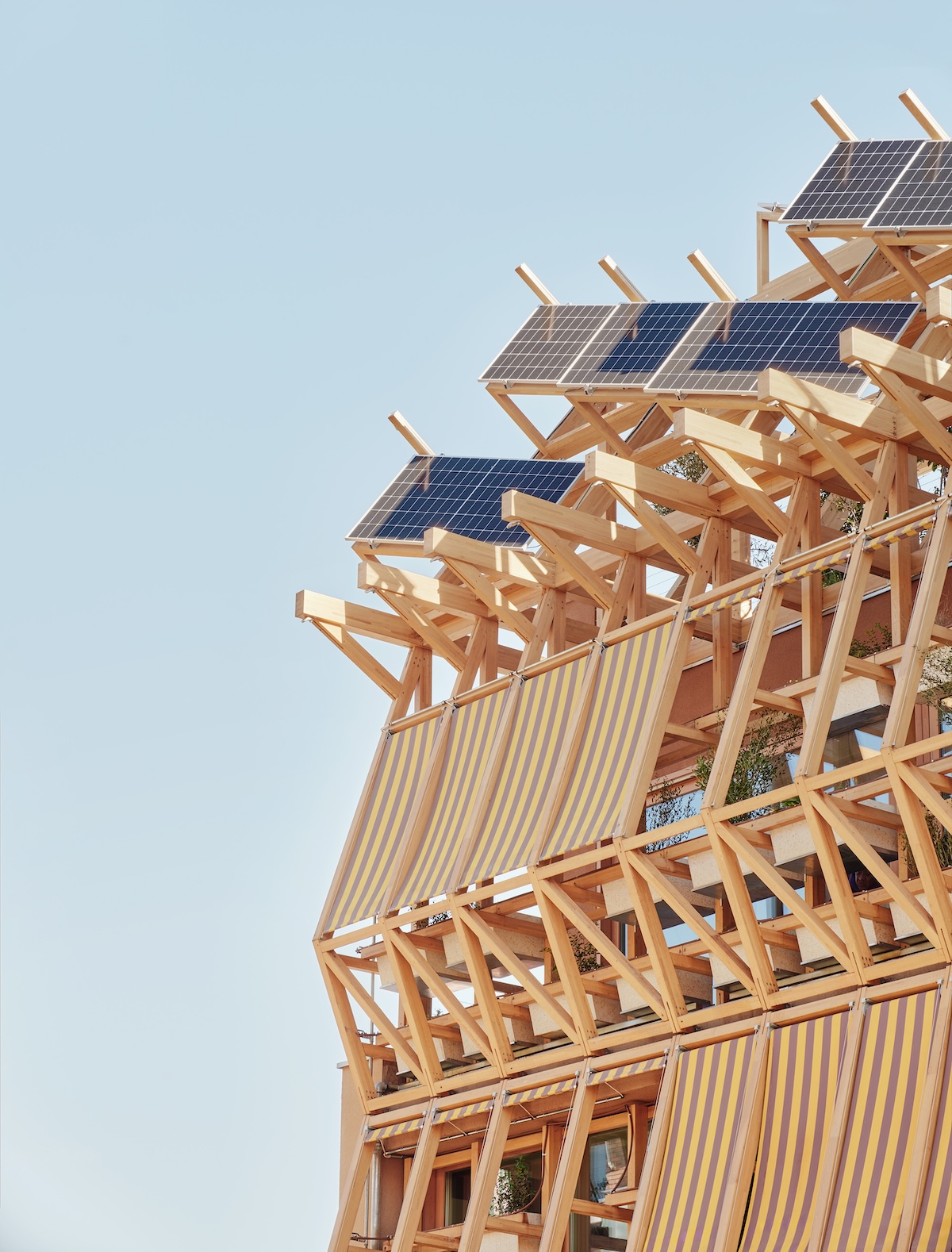
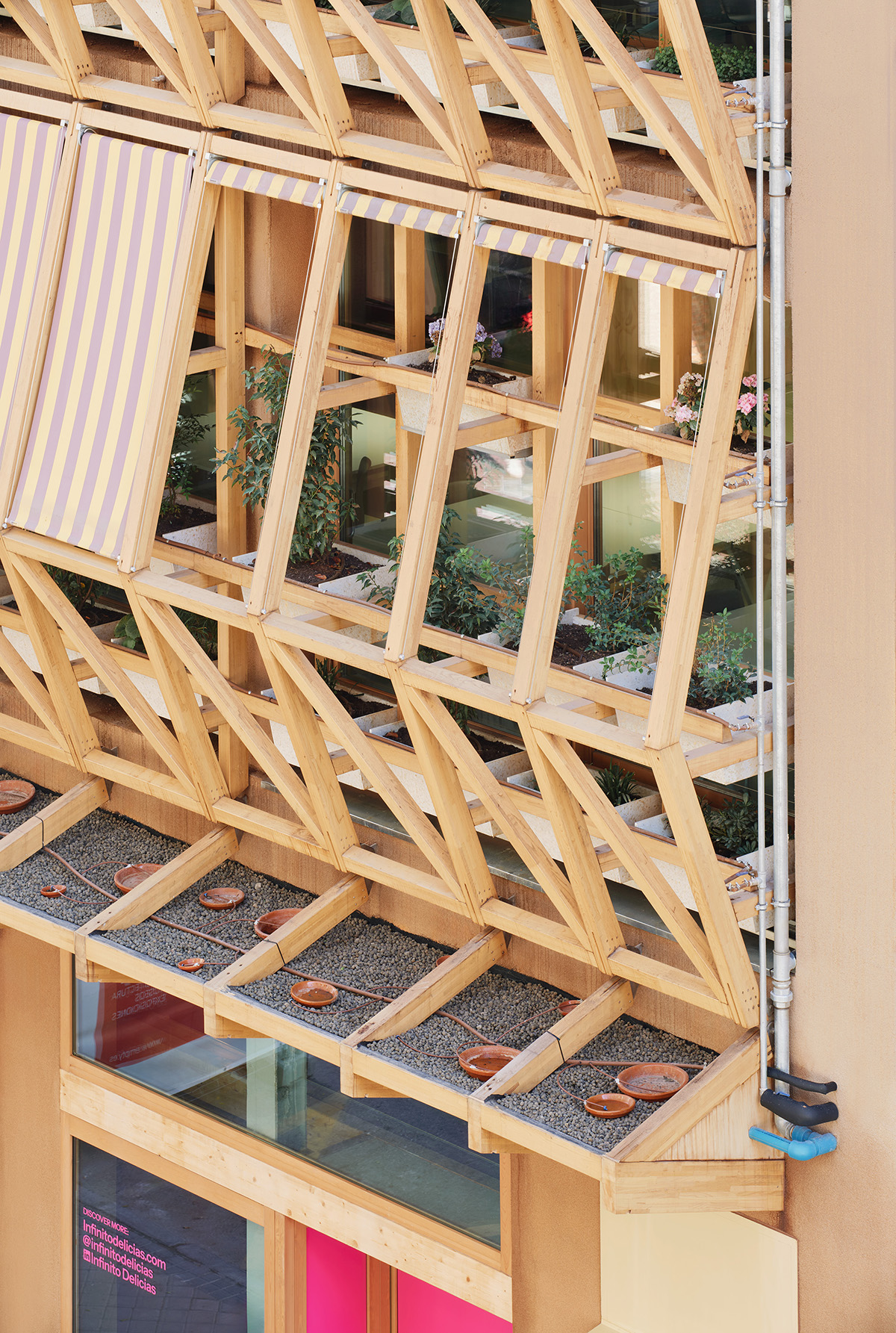
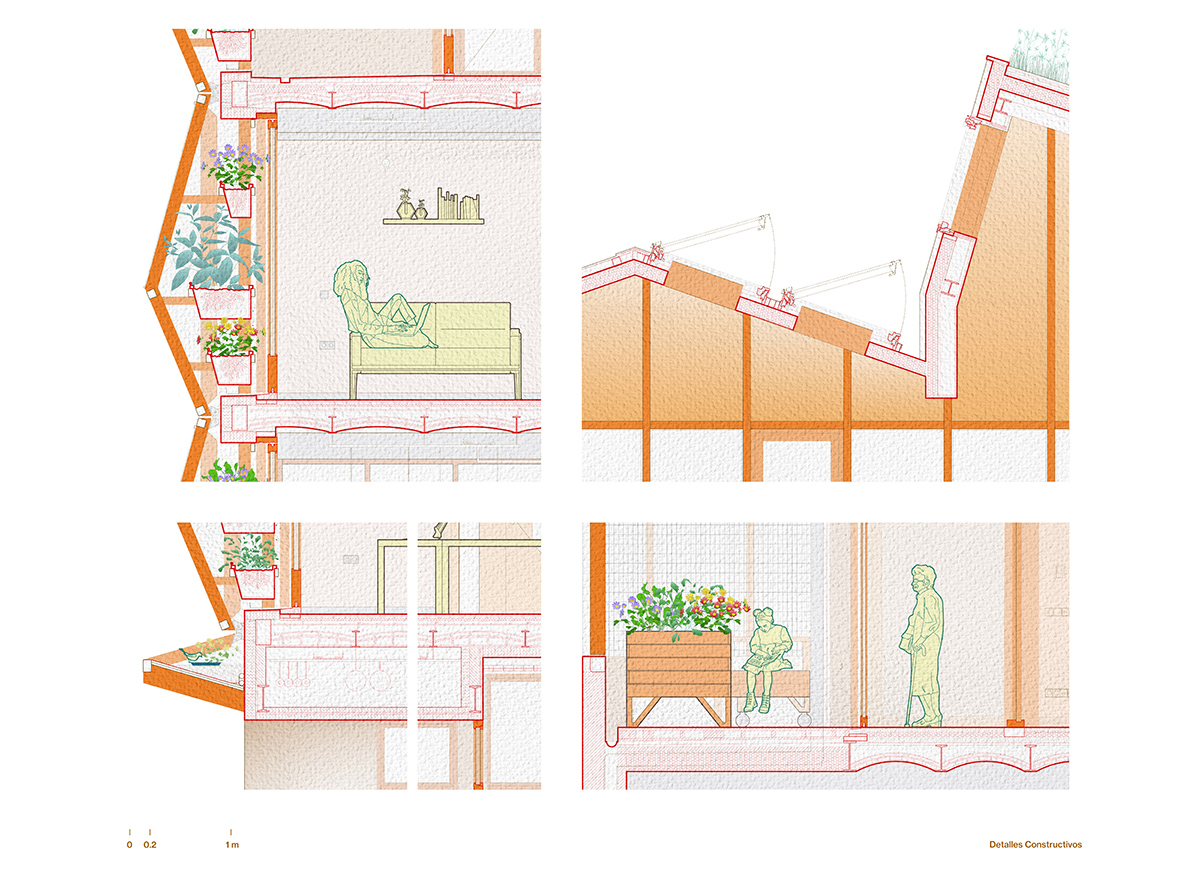
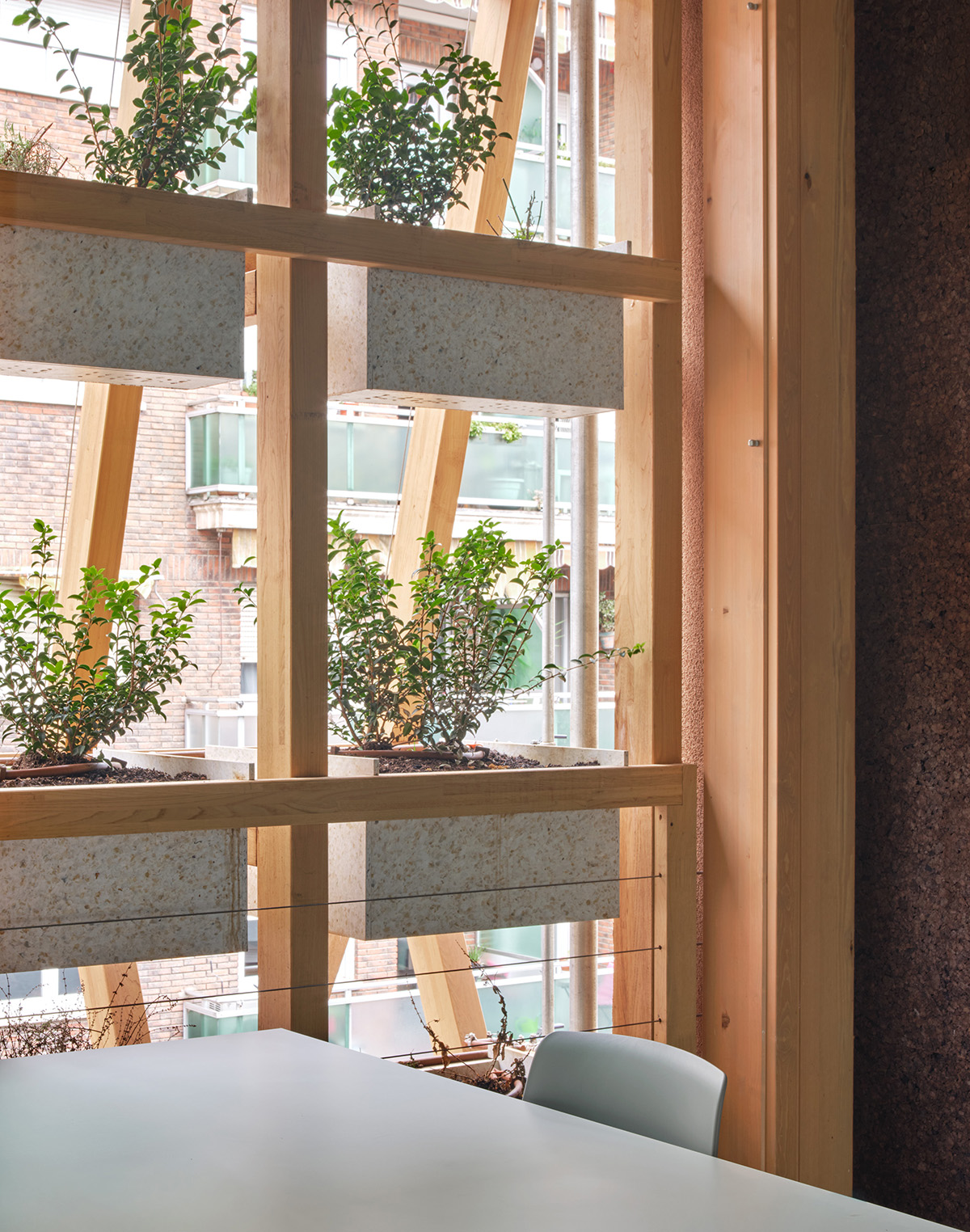
- Implementing an ambitious bioclimatic strategy aimed at optimizing the building’s energy performance and reducing its dependence on fossil fuels. For example, the east and west façades of the block, supported by a structure of chestnut timber “bulges”, constitute a regulatory and spatial reinterpretation of many traditional Madrid façades. In these façades, planted “balconies” with awnings create a thermal buffer that plays a key role in seasonal climate regulation. The outdoor–indoor circulation route linking the various inhabited spaces is also conceived as a tempered space: well insulated from the exterior and free of active heating or cooling systems, it contributes positively to the overall energy savings of the building.
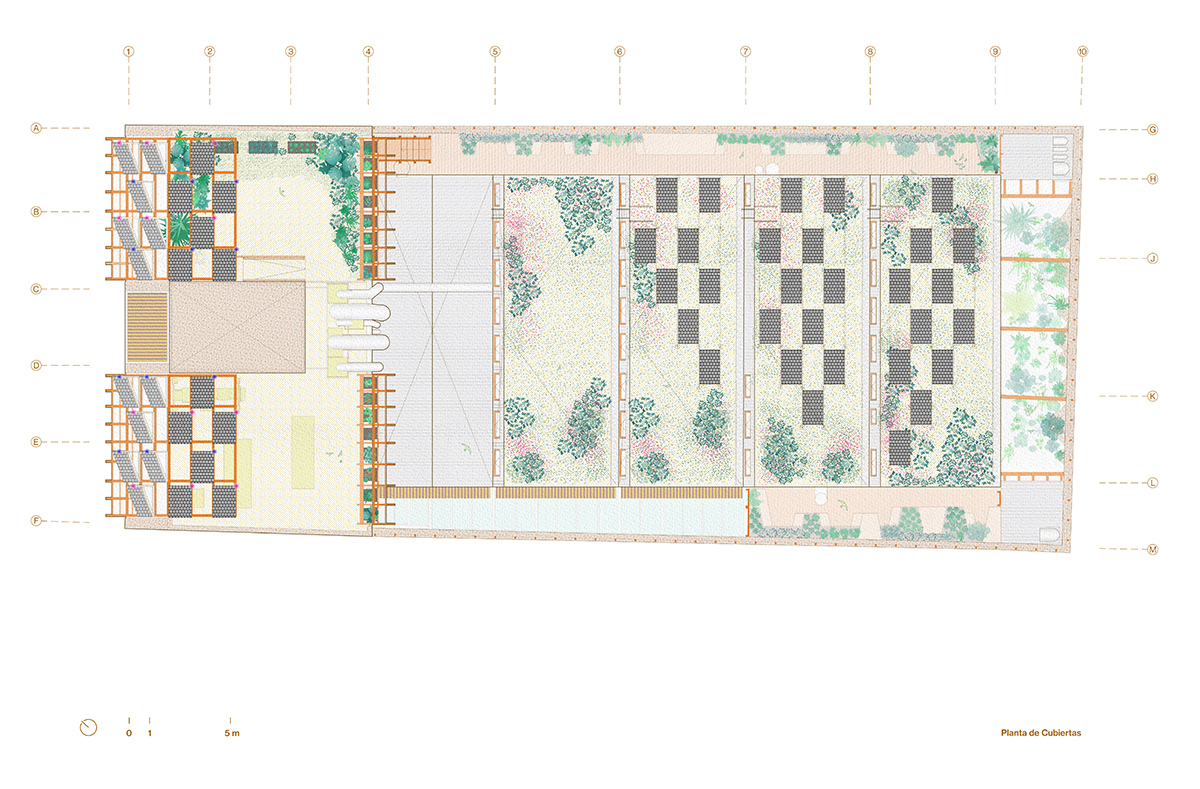
- Integrating a series of gardens, including planted areas, growing tables, composters, vegetated filters and animal architectures such as bird drinking points, with plans to add bat refuges and insect hotels in the future through neighbourhood-based activities. The botanical project supports the bioclimatic strategy, mitigates the urban heat island effect and fosters local biodiversity. Understorey species suited to the tempered microclimate were selected for the central courtyard garden, while regional perennial species with low water requirements were chosen for the external façade gardens. A 15 m³ tank located beneath the courtyard collects rainwater for irrigation.
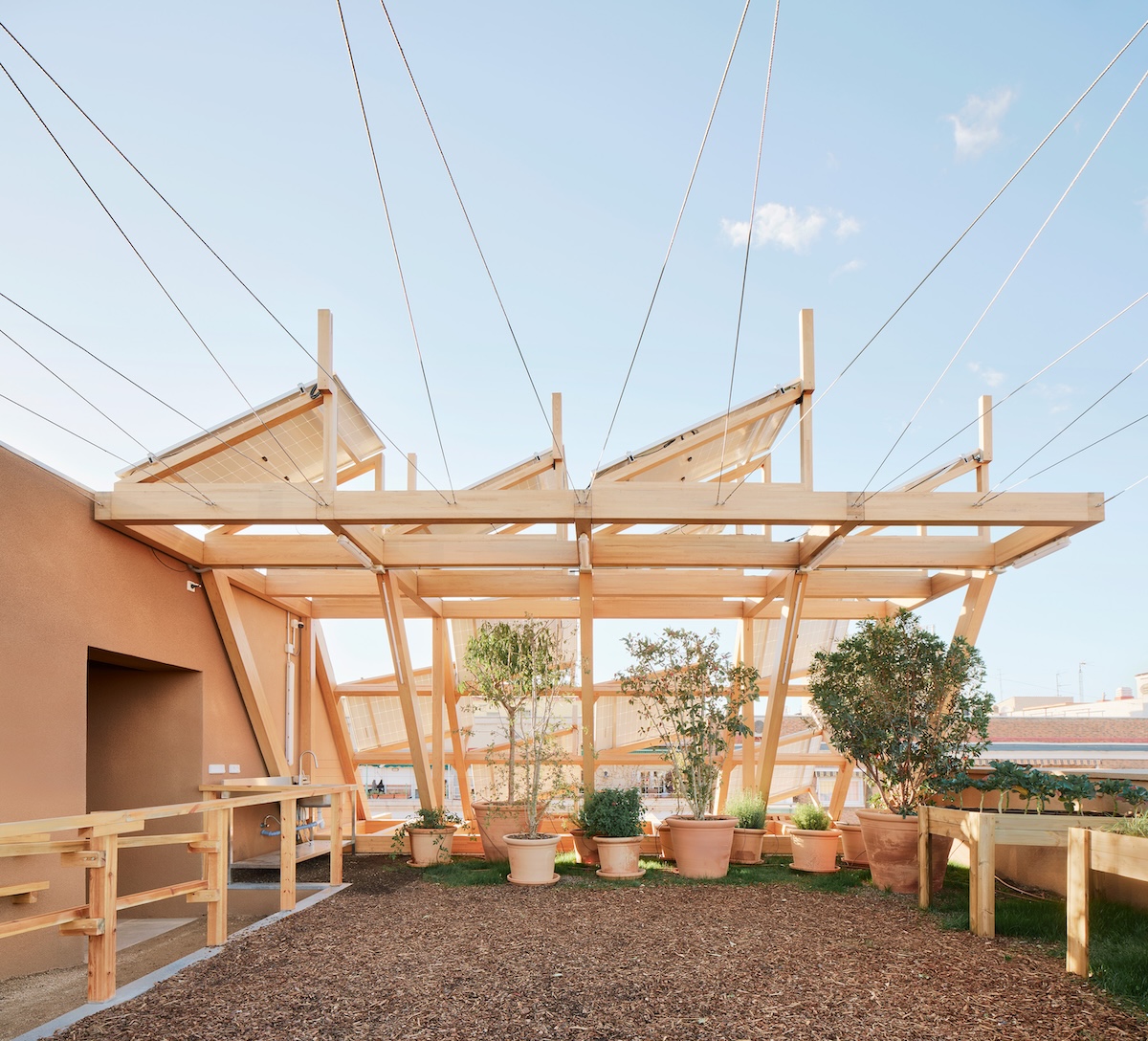
- Addressing the building’s active climate control through renewable energy systems such as geothermal and air-source heat pumps, combined with a distributed and integrated photovoltaic solar field. Part of this system forms a pergola on the roof of the block, providing shade for this leisure space and, moreover, is integrated as a hybrid landscape within the green roofs of the industrial sheds. The project also envisages the creation of an energy community together with neighbouring buildings, including a local school and a residential block.
- Installing indicators that make energy management visible, creating an “energy landscape” that encourages neighbourhood engagement with environmental issues.
- Implementing a decarbonization strategy that encompasses design decisions, material specifications, and organizational and programmatic configurations of space.
In the context of the climate crisis, the project addresses socio-ecological challenges that require urgent attention. On the one hand, it is grounded in the understanding that every construction detail, material specification and spatial strategy entails an ecological commitment to others—human and more-than-human, past, present and future generations, and diverse bodies—across multiple spatial and temporal scales. On the other hand, these challenges are approached by considering how architecture can give rise to desire, opening up imaginaries through which to envisage alternative ways of living together and futures that are less exclusively focused on the human.
* Casa de la Arquitectura Award 2026, category ES_INNOVACIÓN (2026).
* FAD Award 2026, category Architecture (2026).
* COAM Award (2026).
* ROOM Award, category Architecture (2026).
* ALDES Award for the Best Project in Sustainability, Decarbonization, or Best On-Site Energy Generation in a Building. Rebuild (2026).
* First Prize CESUGA Awards Wooden Architecture, category Refurbishment (2026).
* MARCH Awards 2026, Honorable Mention in the Large Adaptive Reuse Category (2026).
* Selected CSCAE Award (2026).
* Finalist Egurtek Award Wood Architecture and Construction, category Building (2026). [Award decision: 10/26].
* Finalist BREEAM, categories Climate Resilience Excellence, Communities & Social Value Leadership, Refurbishment & Fit Out Excellence, Small Project, Big Impact (2026). [Award decision: 09/26].
* Selected for the 14th Ibero-American Biennial of Architecture and Urbanism (XIV BIAU), category: Works (2026).
Composition of knowledge
Integral refurbishment of an industrial building for Infinito Delicias, a new citizen cultural space promoted by the Daniel and Nina Carasso Foundation”
1. Ecological contract. The ecological performativity of architecture involves understanding the construction and spatial processes as ecological commitments to a wide range of spatial and temporal scales.
Construction detail = ecological gateway and mobilization of territories.
2. Expanded neighbourhood. Architectural trials for encounters between humans and more-than-humans.
Interspecies diplomacy, broadenig the cosmos of the political.
3. Intra-actions. Strategies for activating links with other bodies: inhabitants, people, plants, birds, micro-organisms, technologies, imaginaries....
Construction = interface.
4. Green infrastructure. Networks of gardens that preserve biodiversity, contribute to the bioclimatic strategy, and reduce the urban heat island effect.
Ecological support, preservation of biodiversity and adaptation to global warming.
5. Crossroads. Intertwined paths to increase chance encounters. The building and the neighborhood get intertwined.
Infrastructures of communication, amplifiers of interaction and urbanity.
6. De-carbonisation. Material strategies to minimise CO2 emissions. Controlling the ecological footprint. Making use of biomaterials. Attending to the chains of custody. Reducing the operational energy. Using renewable sources. Cutting back on dependence on fossil resources. Biogenic carbon capture.
Spatial operations = intra-scalable strategies.
7. Minimal layers. Limiting components to only the strictly necessary for purposes of reducing the ecological repercussion.
Material limits; aesthetic, affective and ecological opportunities.
8. Fossil heritage. Pre-existences that are more an edificial body. In ecological terms, pre-existences also include the ecosystemic conditions modelled by CO2 emissions.
Fossil histories, decarbonising the futures.
9. Experimental condition. Spaces conceived as manifestations of experimental processes on multiple scales through the synthesis of knowledge.
Risk management, experiments in what is possible.
10. Desire. Ecology is also always an ecology of desire. Ecosystemic relationships (are) unfold(ed) (in) desiring fields.
Construction details = infrastructures of desire.
* Casa de la Arquitectura Award 2026, category ES_INNOVACIÓN (2026).
* FAD Award 2026, category Architecture (2026).
* COAM Award (2026).
* ROOM Award, category Architecture (2026).
* ALDES Award for the Best Project in Sustainability, Decarbonization, or Best On-Site Energy Generation in a Building. Rebuild (2026).
* First Prize CESUGA Awards Wooden Architecture, category Refurbishment (2026).
* MARCH Awards 2026, Honorable Mention in the Large Adaptive Reuse Category (2026).
* Selected CSCAE Award (2026).
* Finalist Egurtek Award Wood Architecture and Construction, category Building (2026). [Award decision: 10/26].
* Finalist BREEAM, categories Climate Resilience Excellence, Communities & Social Value Leadership, Refurbishment & Fit Out Excellence, Small Project, Big Impact (2026). [Award decision: 09/26].
* Selected for the 14th Ibero-American Biennial of Architecture and Urbanism (XIV BIAU), category: Works (2026).
Composition of knowledge
Integral refurbishment of an industrial building for Infinito Delicias, a new citizen cultural space promoted by the Daniel and Nina Carasso Foundation”
- Architects (Project and SIte Supervision): Husos arquitecturas (Camilo García, Diego Barajas) + elii [architecture office] (Uriel Fogué, Eva Gil, and Carlos Palacios)
- Project coordination (Husos + elii): Teresa Martínez
- Site supervision assistance (Husos + elii): Teresa Martínez and Ricardo Monteiro
- R&D (Husos + elii): Almudena Tenorio and Teresa Martínez
- Development of the economic, management, and social innovation model: Julia López Varela + Zuloark
- Urban and property research: Husos arquitecturas + elii [oficina de arquitectura] and Ultrazul.
- Quantity Surveyors: Dirtec – Javier Mach and Javier González.
- Urban planning consultancy and permits: García de los Muros arquitectos S.L.P.
- Property and business model consultancy: AIGA
- Building services, structures, bioclimatic design, and LCA: SOCOTEC, BAC, and Aiguasol
- Agronomy and environmental services: Heliconia and Tierra
- BREEAM cerification: Ineria Management
- Telecommunications, security, and audiovisuals: Azul Telecom and Fluge
- Furniture project: Husos arquitecturas + elii [oficina de arquitectura] and Ultrazul
- Site specific furniture and lighting design: Husos arquitecturas + elii [oficina de arquitectura]; Lucas Muñoz and Casa Antillón
- Restaurant consulting: Anson + Bonet
- Kitchen equipment: foodSAT
- Wayfinding and signage: Avanti
- Husos + elii collaborators: Teresa Martínez, Almudena Tenorio, Ricardo Monteiro, Lydia Terkenli, Raquel Peña, Sem Fernández, Álvaro Garrido, Aníbal Arenas, Ciaran Farren, Jeremy Schipper, Elena del Cura, Giulia Poma, Elena Taliano, Álvaro Heredia, Pedro Marcano, Ilaria Sasdelli, Jimena Jaén, João Manfrinato, Lucía Fernández, Ana López, Javier Élices, Victoria Dafos, Claudia Sánchez, Francisco Toré, Marta Vaquero, Raquel Cano, Gemma Barricarte, Juan Mateos, Mónica Palfy, Stefania Rasile, Sophia Liatrou.
- Client: Fundación Daniel y Nina Carasso / La Casa Efervescente
- Project Manager: Fermín Montequín
- Construction company: Empty
- 3D images: Bruno Muñoz with Husos + elii and Artefactory
- Photography: José Hevia e Impresiones cotidianas (Juan Asolot)
- Video: Imagen Subliminal (Miguel de Guzman + Rocío R. Rivas) @imagensubliminal
- Acknowledgments: Past and present team of the Daniel and Nina Carasso Foundation / La Casa Efervescente
- This work has been carried out within the framework of an interdisciplinary process developed by Husos and Elii + Ultrazul + Fundación Daniel y Nina Carasso.