147 · labxlab
Laboratory of laboratories
Remodelling the “Antigos Silos de Farinha” building in the Unicorn Factory, Beato Innovation District, Lisbon
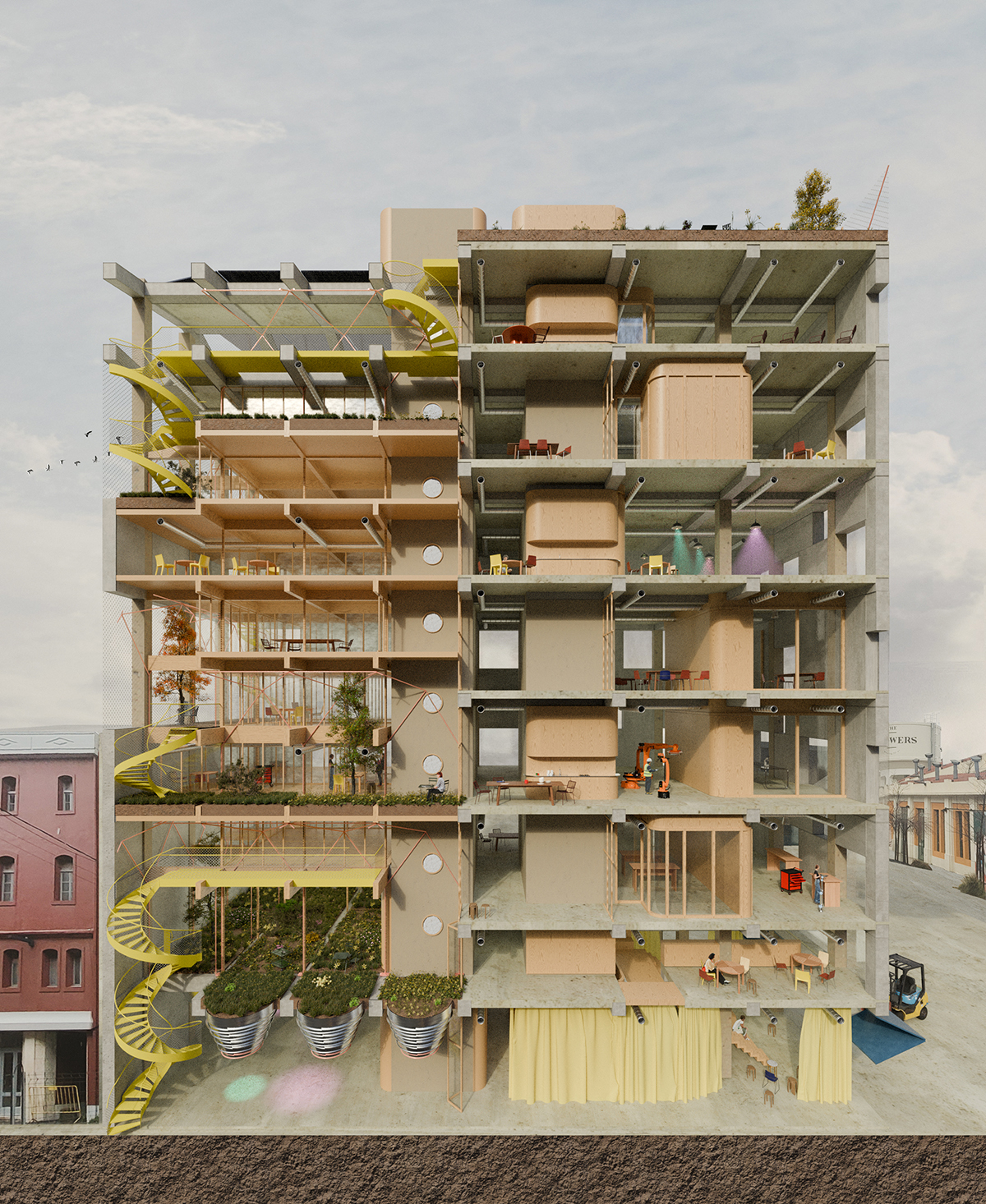
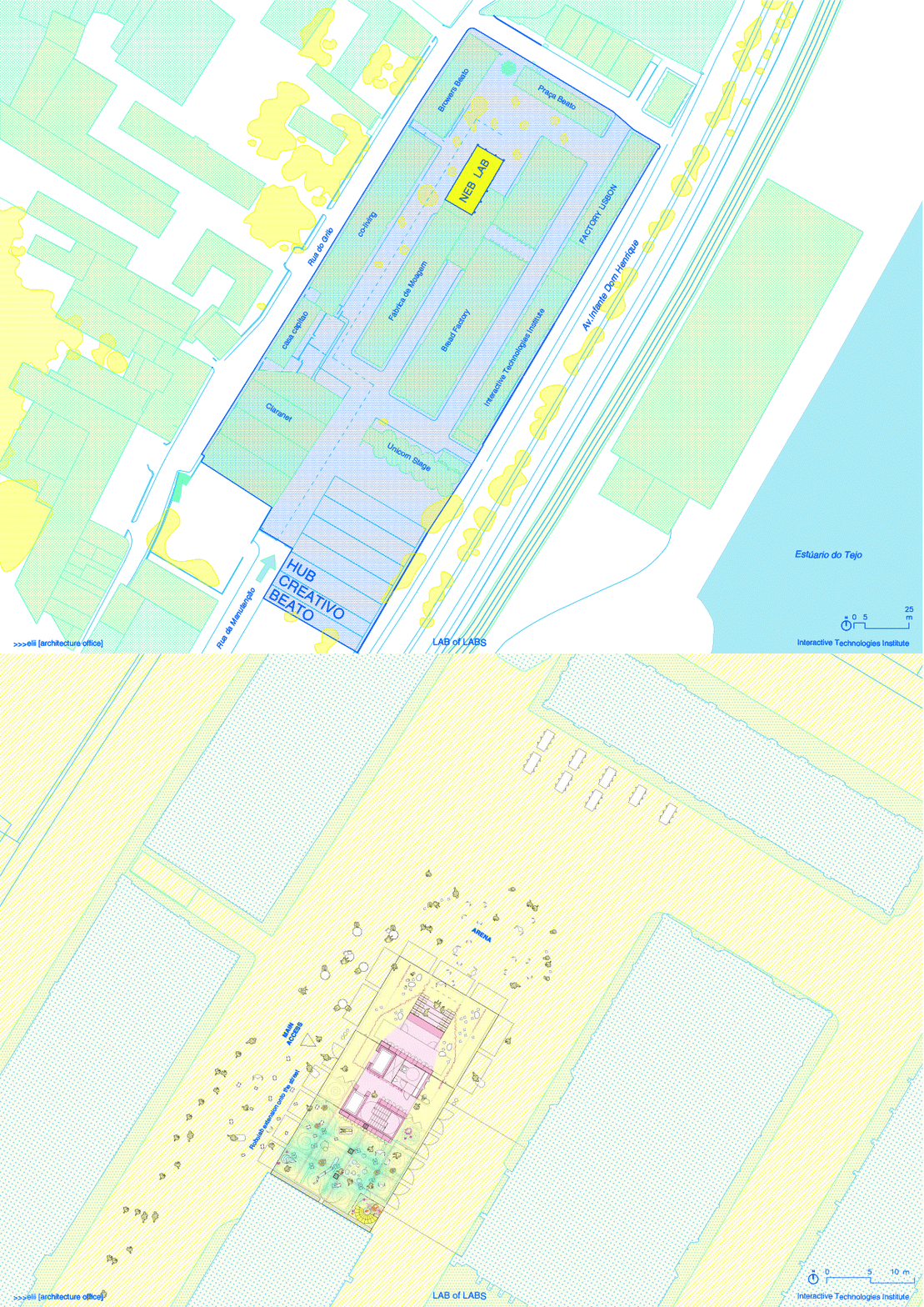
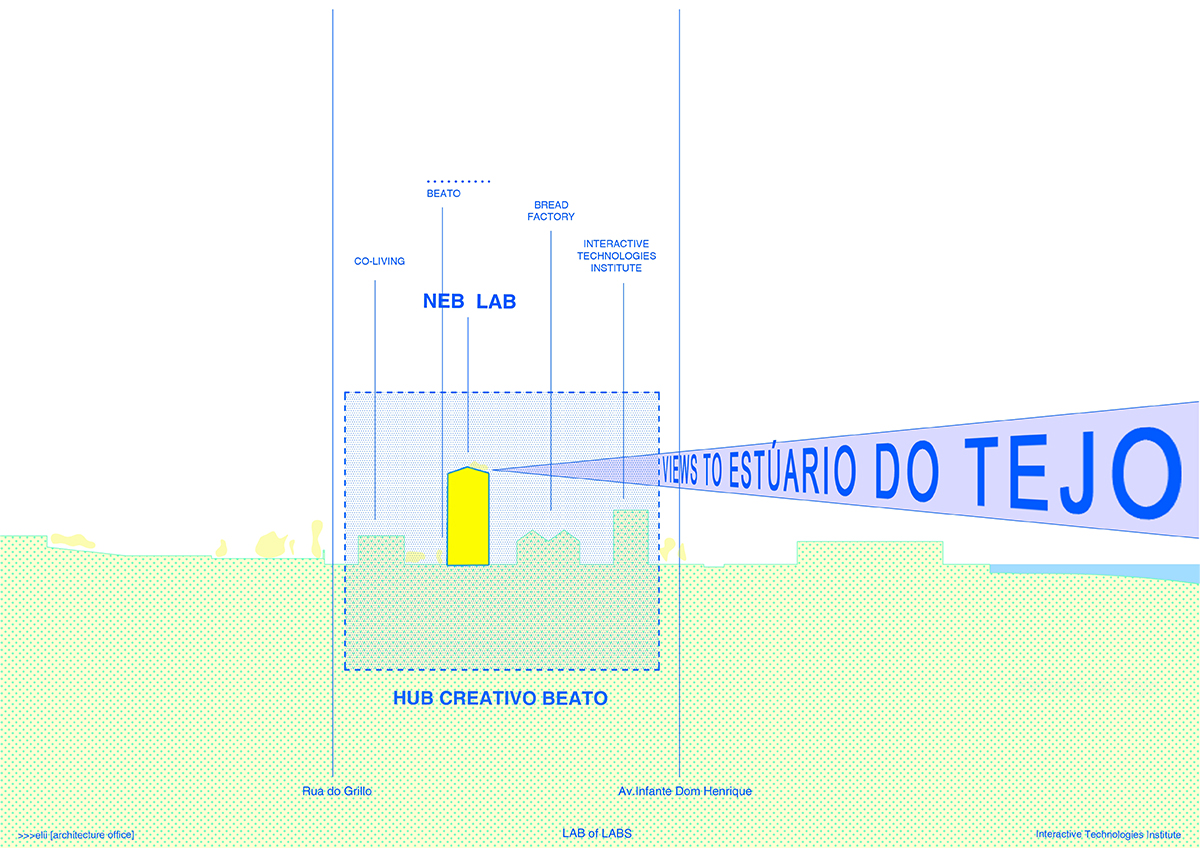
LABxLAB is a project to renovate and remodel an old silo located in the Beato Innovation District in Lisbon. The aim is to house the new headquarters of the Lisbon NEB Lab, an institution that brings together various research units of the IST-ID. It is conceived as a lab of labs that in turn operates as an ecological infrastructure on an urban and regional scale.
Starting out from the conditions of the context, the state of the building and the functional requirements, the project seeks to enhance the historical value of a heritage site that forms part of a “landscape of silos” and old industrial buildings, to foster engagement with the neighbourhood, to take advantage of the architectural potential of pre-existences to advance a contemporary functional programme, to encourage functional adaptability and to develop an exemplary ecological project.
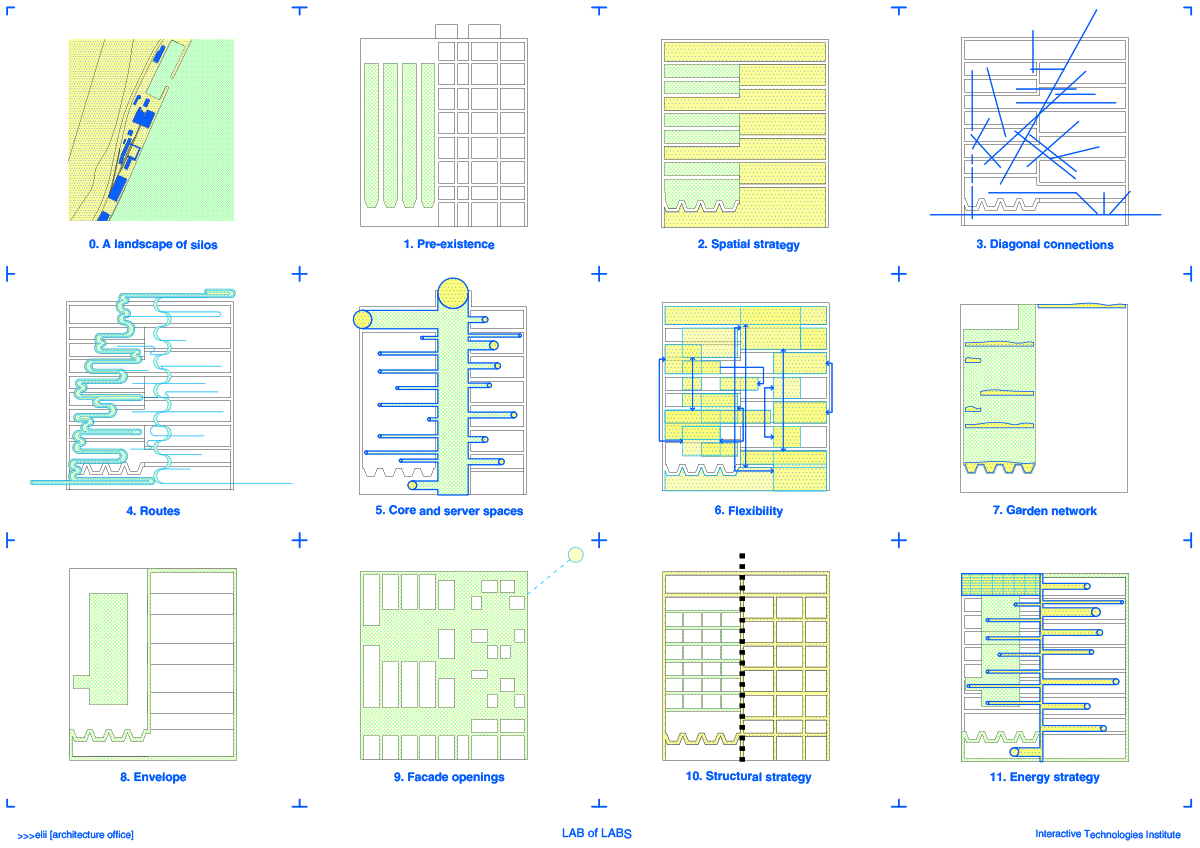
The architectural proposal unfolds from four basic spatial operations:
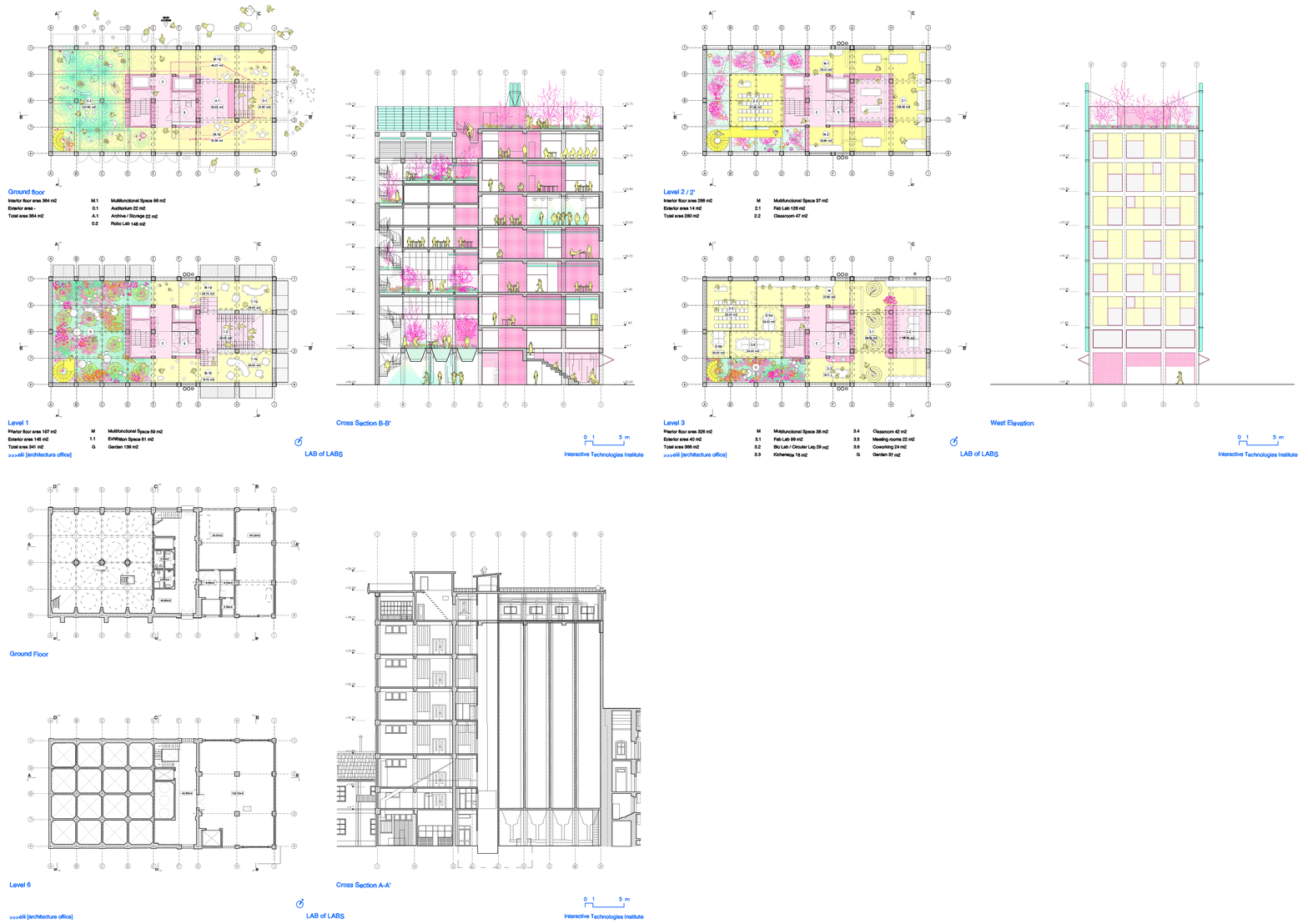
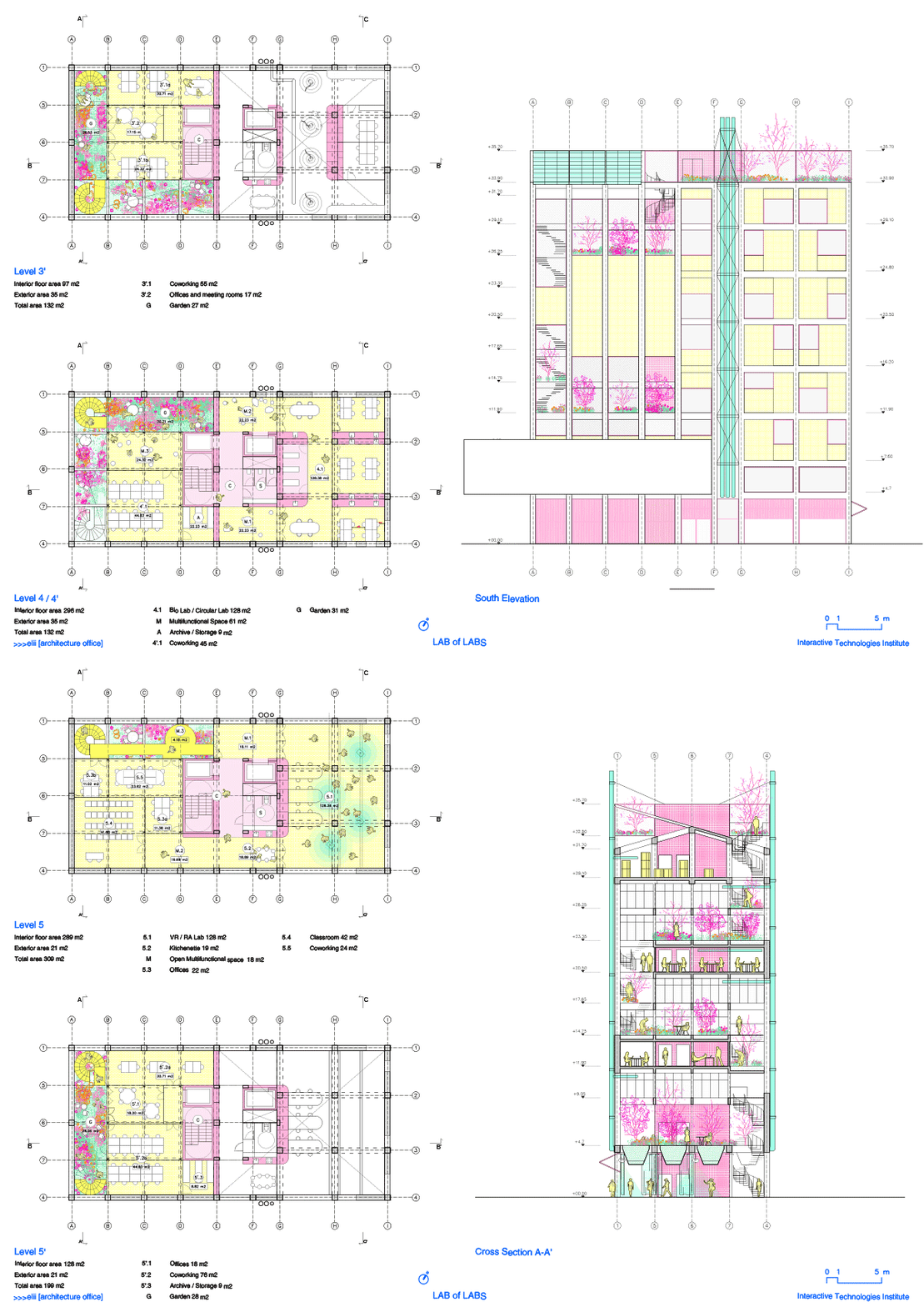
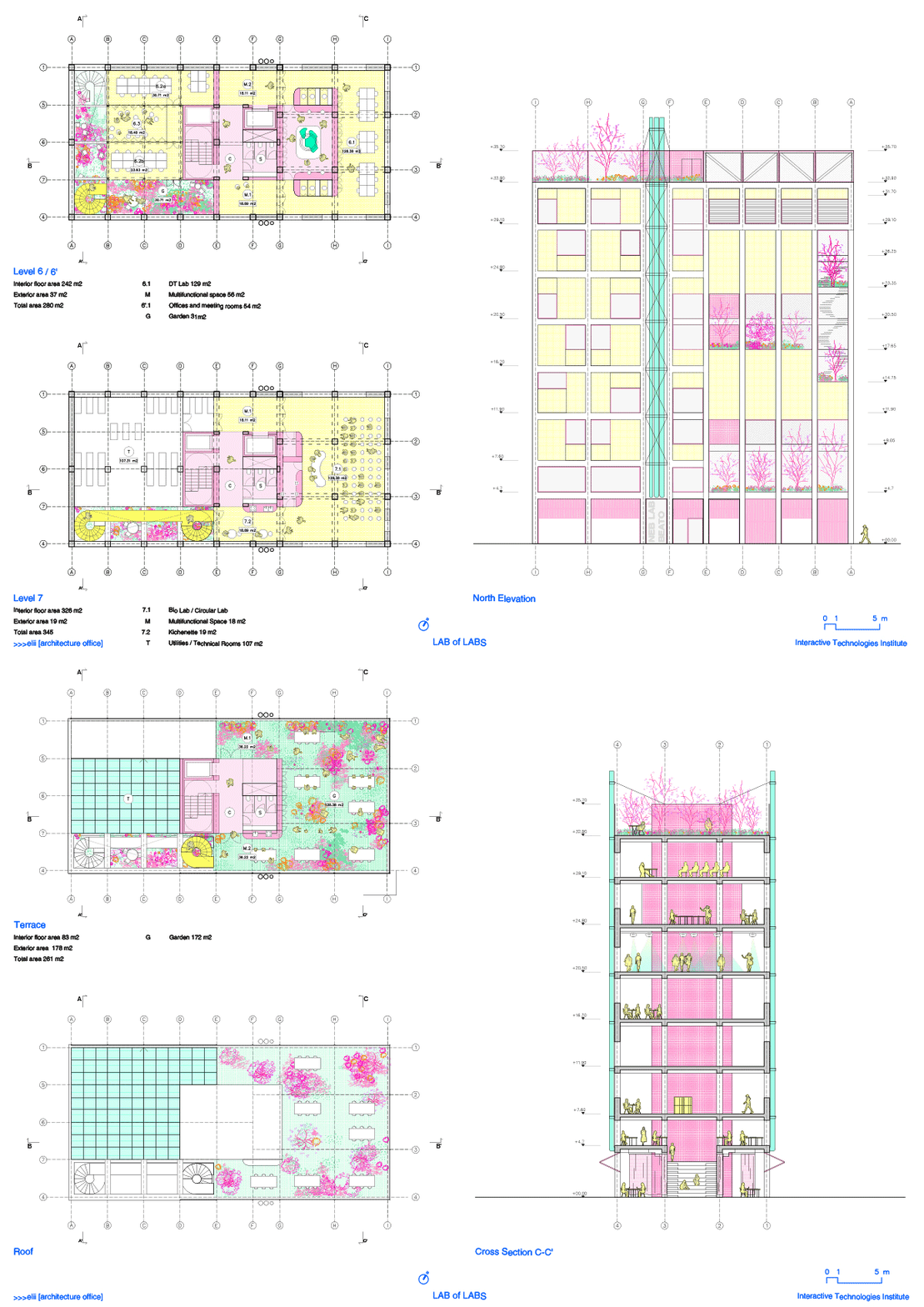
1. Increase the floor space. The strategy calls for implementing new floors to cover empty spaces inside the silo until the useful square footage is reached. This is achieved first by adding new timber subfloors that extend the floor slabs of the current work spaces, thereby giving continuity to the existing horizontal planes. Then, between the slabs, and taking advantage of the building’s considerable height, we insert a number of loft platforms to gain more floorspace. The new spatial structure of continuous floors and intermediate lofts creates crisscrossing relations between functional units to foster encounters between disciplines, thereby optimizing space while establishing synergies between the different areas of knowledge. Thus, the sweeping open spaces located to the northwest of the building are adapted to the dimensions and environmental requirements of the technology they will house (mainly robots, machines, and all the other lab equipment) while the new programmable loft floors in the southeast that used to be taken up by the silos are adapted to house all the building’s other uses, with spaces meant for workers as well as for all the other species in the local ecosystem.
2. Openings to open onto the neighbourhood. The openings on the ground floor of the silo are adjusted on one hand to enhance engagement with the surrounding buildings. And on the other, to extend the LABxLAB programmes out to the street. The new woodwork frames stretch outward, making overhangs and canopies to create areas for mingling and to connect the ground-floor auditorium to the street. Also incorporated is a system of projectors that can turn the facades into screens for the plaza and/or surrounding buildings.
3. Rebuilding the communications core. A new communications core is designed that, along with a set of strategically arranged openings, enable easy connections between the different areas and streamlines the connection flows. Circulation is arranged along two main itineraries: the primary one, which runs through the central core, ensures universal accessibility (physical as well as cognitive) of the while site, as well as compliance with evacuation requirements. It integrates the vertical circulation (stairs, lifts and service lifts), the vertical distribution of the facilities (expandable in the future) and the service areas (toilets, storage rooms and special-use rooms). The secondary one is arranged through:
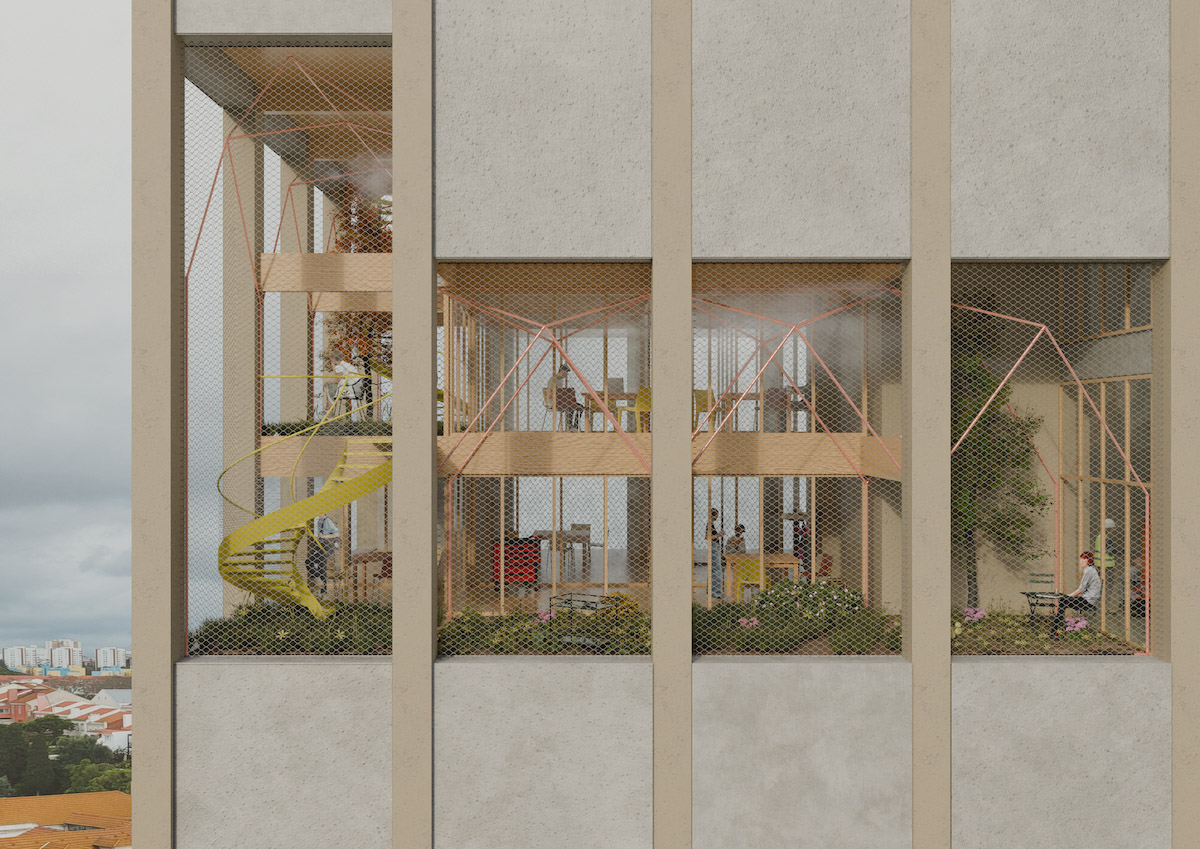
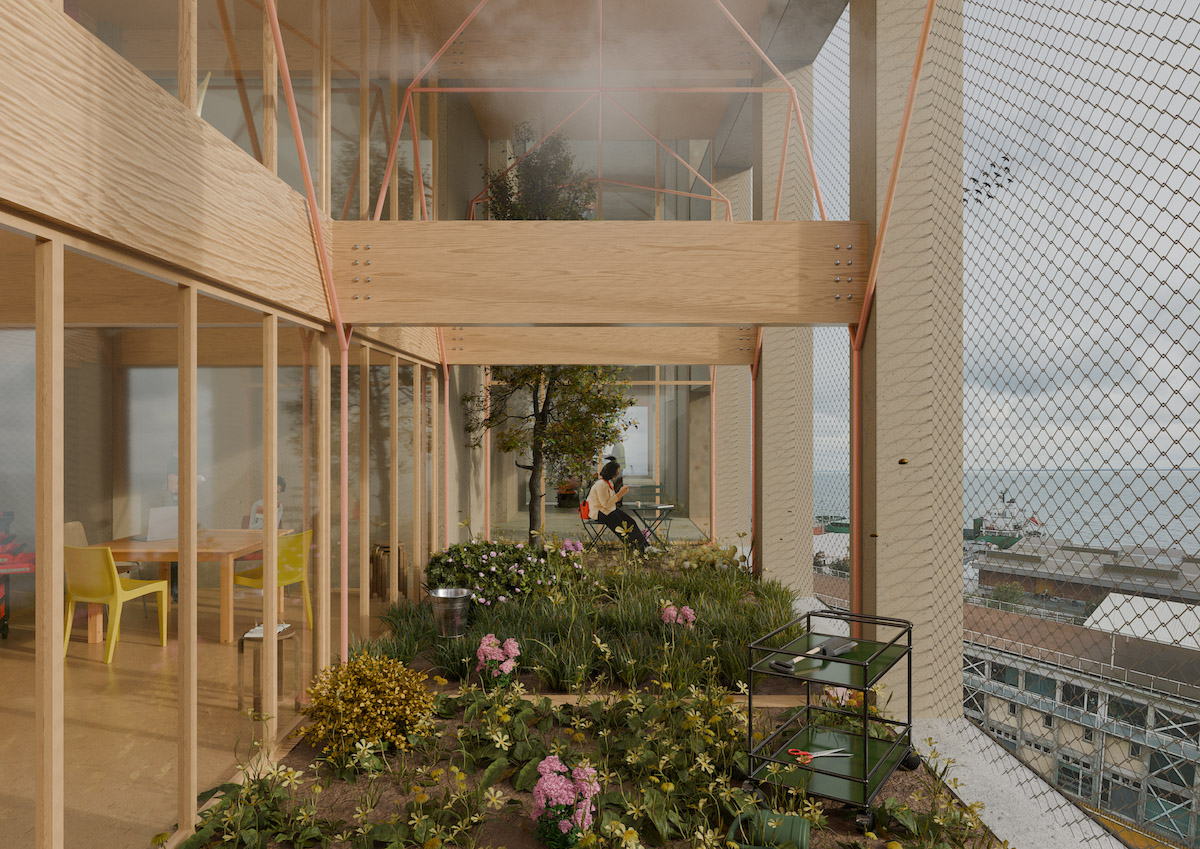
4. Integration of a network of gardens. A set of double- and triple-height spaces are added for greenspace. As a whole, it comprises a network of spaces for encounters, making an indoor-outdoor route that enhances the functional and experiential dimension of the building. It independently connects the street to the rooftop, passing through the work areas and common spaces. The itineraries through the communications core as well as through the network of gardens intersect each other on each floor, so partial routes can be taken, thereby enhancing flexibility of circulation and ensuring access control. This network of gardens forms part of the bioclimatic strategy and is solved through a botanical project that fosters biodiversity and reduces the urban heat island. It is equipped with a rainwater and runoff water recycling infrastructure to lower its water consumption. Moreover, the gardens have areas for planting, for composting, and for providing shelter for the local fauna.
5. Arrangement of an infrastructural network. The design calls for a basic infrastructural system that commences in the core and covers the spaces strategically. Besides covering the basic needs of the labs and the rest of the areas in the building, this infrastructural support fosters versatility in use and will allow for other arrangements in future.
6. Implementation of an ecological strategy. LABxLAB works as an ecological infrastructure on different scales. The main design decisions take into account the ecological performance of the whole. This first premise is to preserve the pre-existing shell to the utmost in order to make use of its embedded energy. Thus, the existing concrete and steel structure is kept, and only reinforced where necessary. For the new areas, biogenic materials and materials with a low environmental impact are prescribed. All the new structural elements added to the building are wooden: cross laminated timber (CLT) panels and glue-laminated timber (GLT) beams and pillars. The arrangement of functions, openings and enclosures unfolds a bioclimatic strategy that is both effective and adaptable, one that helps optimise energy efficiency and reduce dependency on fossil fuels. Added to this is the use of renewable energies to solve the building’s active heating and cooling. The sloped roof extends out to house a new built-in photovoltaic solar field. Lastly, the project develops a decarbonisation strategy that streamlines the design, materials prescribed, and organisational and functional configurations of the spaces so as to minimise CO2 emissions.
Taken together, the ensemble generates an architecture that nourishes, regenerates and promotes cross-disciplinary relations in the broadest sense of the work, between the inhabitants and the neighbourhood, thus renewing the ecosystemic role of this historical landmark.
1. System. Intervention protocols to singularize spaces and unfold programs.
Limits that enable possibilities, caring for the possible.
2. Promenade. Intertwined paths to increase chance encounters.
Infrastructures of communication, amplifiers of interaction.
3. Infrastructural support. Technical networks that enable distributive possibilities in functions as well as atmospheres.
Technical support, caring for power.
4. Ecological performativity. Intra-scalar strategies (in space and time) that attend to socioecological endeavours.
Construction details, ecological portals.
5. Expanded neighbourhood. Architectural trials for encounters between humans and more-than-humans.
Interspecies diplomacy, broadenig the cosmos of the political.
6. Fossil heritage. Pre-existences that are more an edificial body. In ecological terms, pre-existences also include the ecosystemic conditions modelled by CO2 emissions.
Fossil histories, decarbonising the futures.
- Architects:
- elii - Uriel Fogué, Eva Gil, Carlos Palacios
- Collaborators:
- elii – Teresa Martínez Pagés, Claudia Sánchez, María Silva
- Developers:
- Cámara Municipal de Lisboa e IST-ID
- Surface:
- 3271m2
- Date:
- 2025
- Location:
- Beato Innovation District, Lisboa