109 · casa diversa
Diverse knowledge
Space prototype, feasibility study for the new headquarters of the FDNC, Madrid
*This is one of three spatial prototypes in the interdisciplinary process for carrying out a feasibility study to build the new headquarters of the Daniel and Nina Carasso Foundation (DNCF) in Madrid.
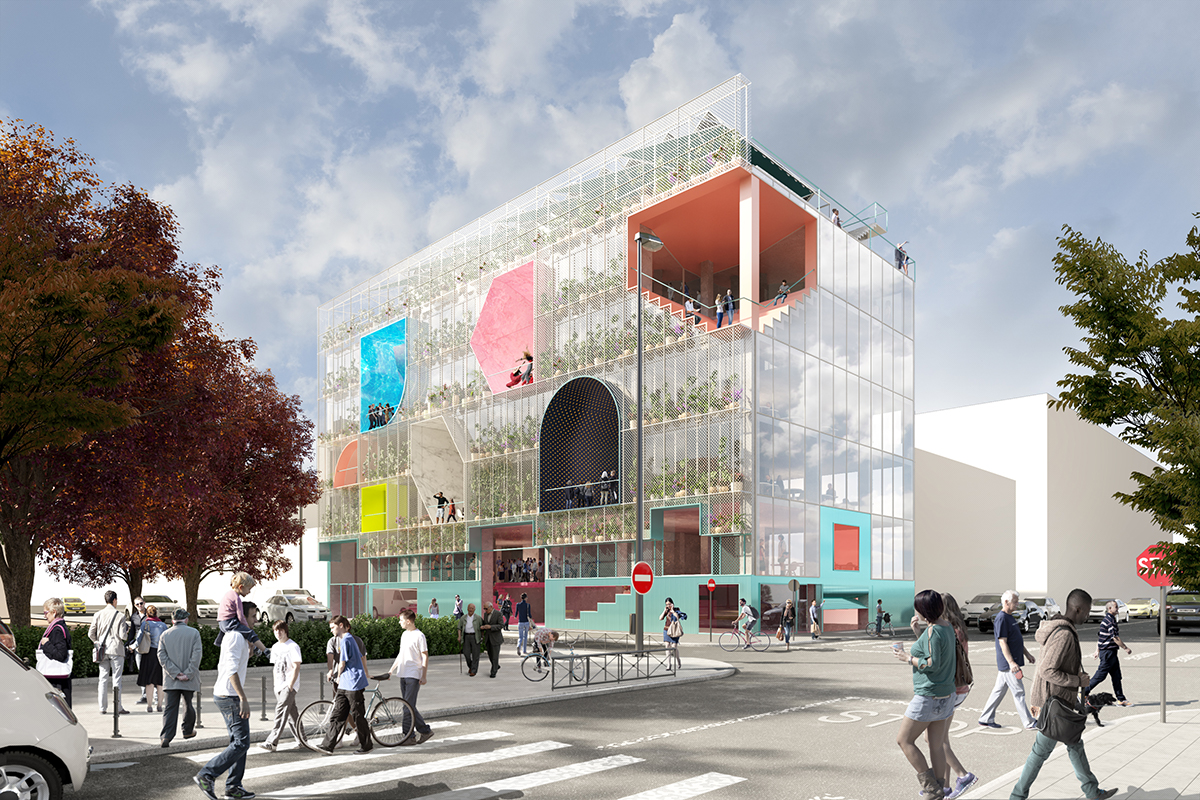
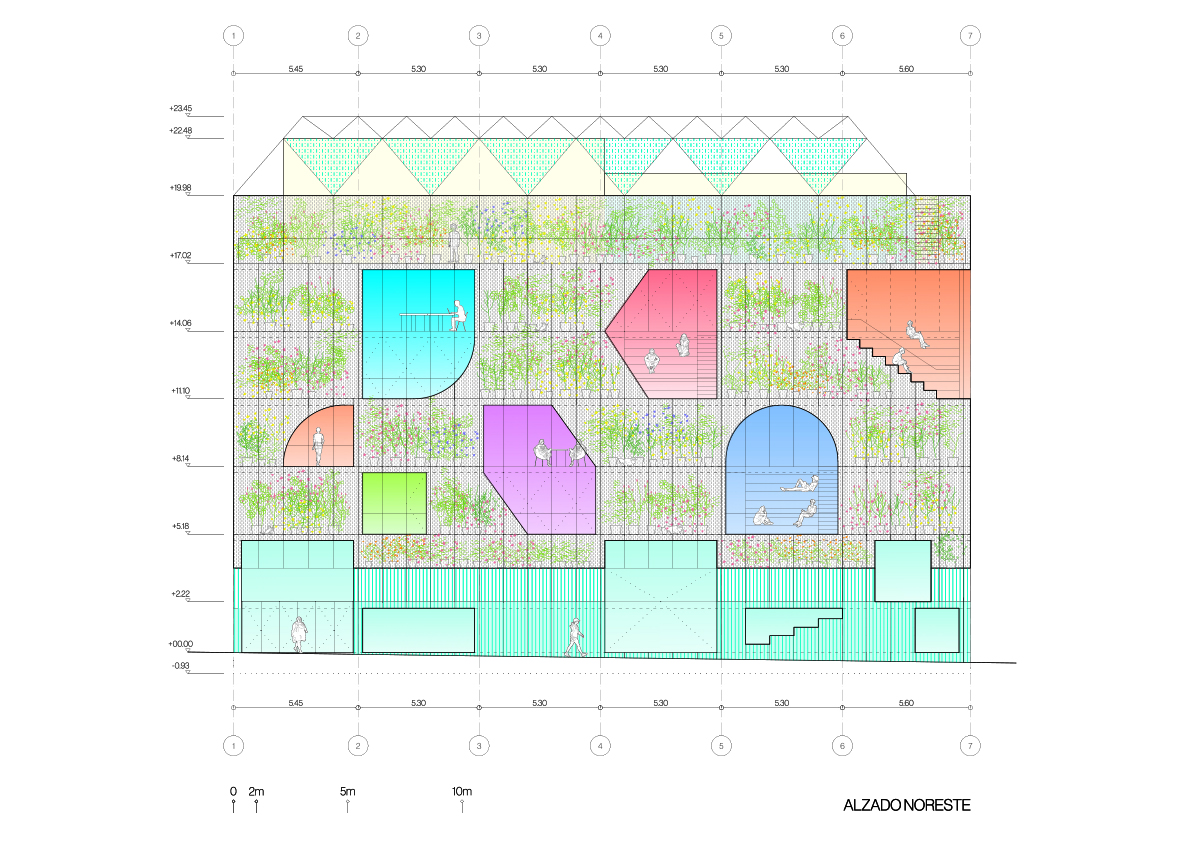
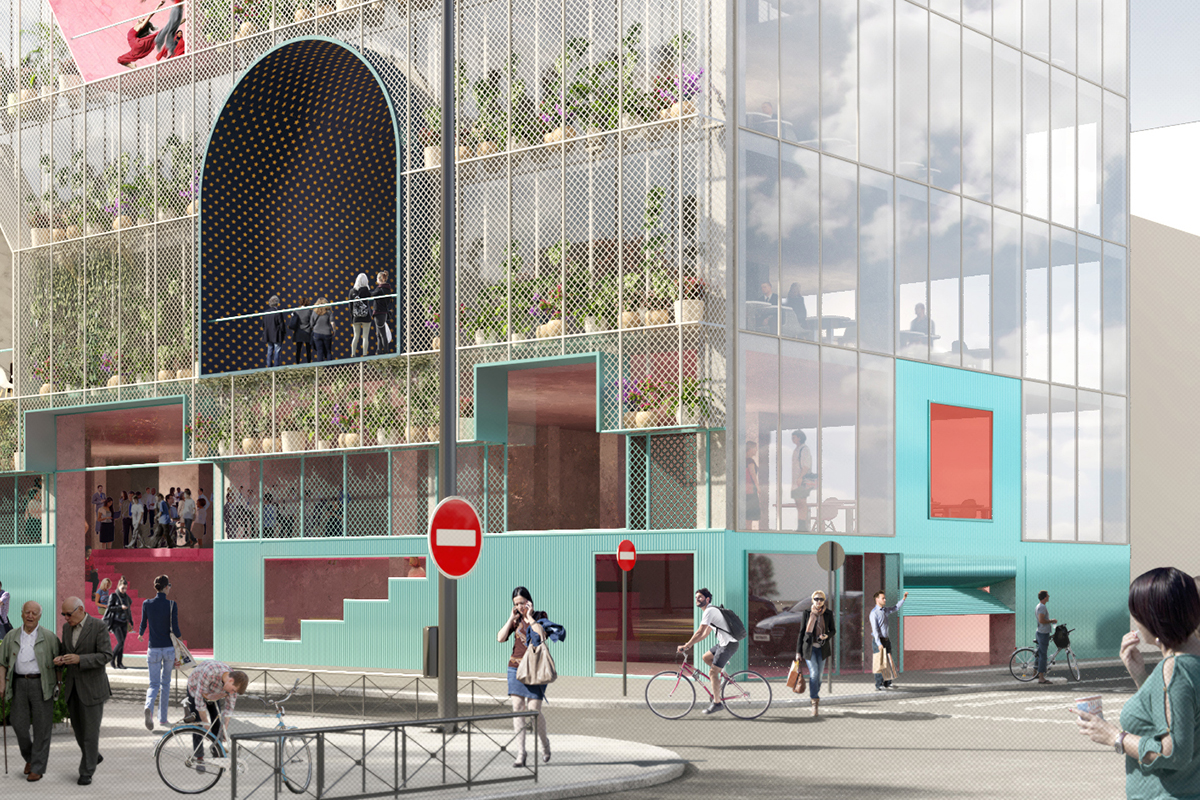
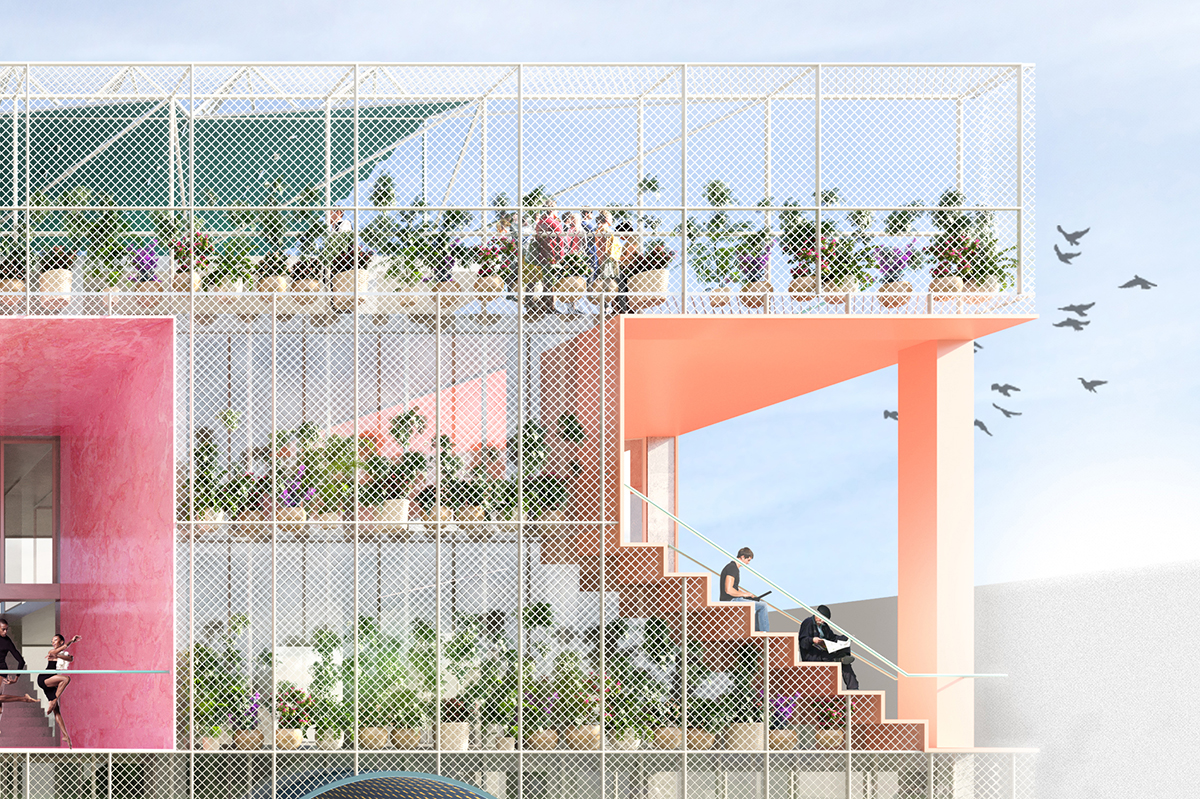
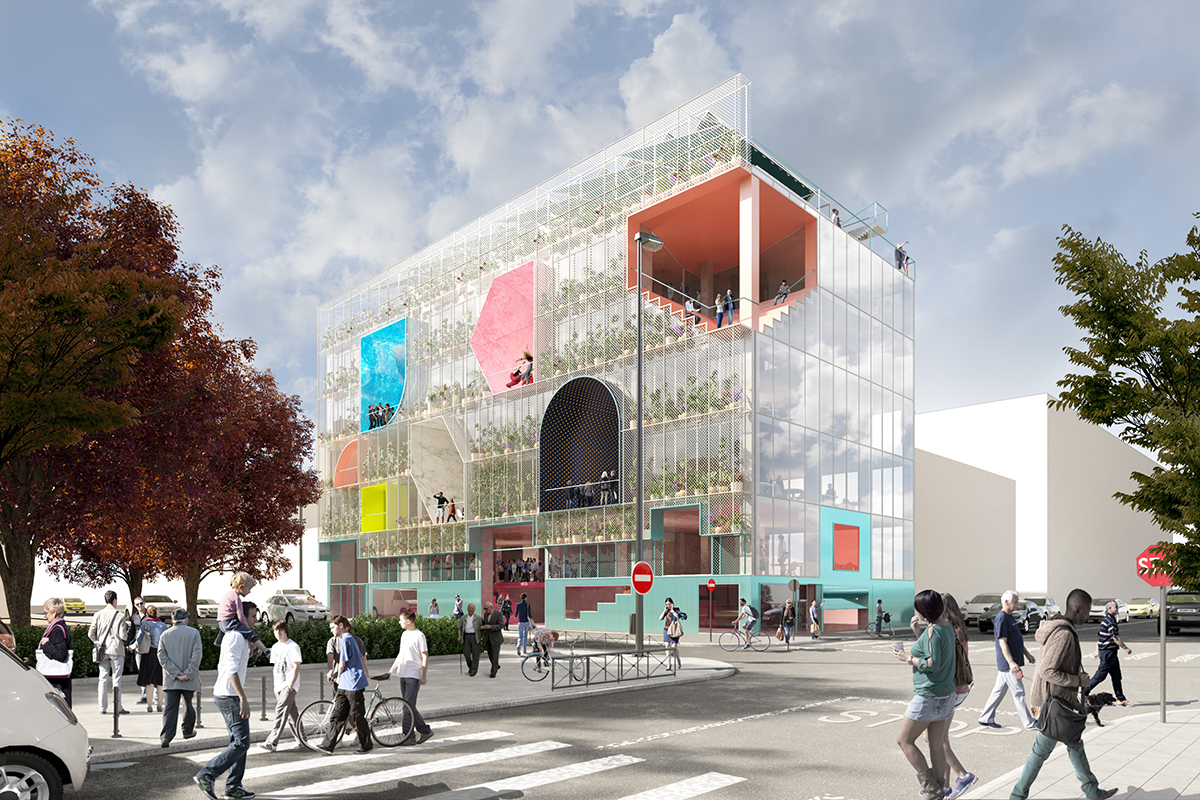
Rising behind a canopy of trees, an upright vegetated plane hosts a number of cut-out spaces suspended in floating equilibrium. At its base, several openings of varying sizes engage the street. A pergola of fabrics and photovoltaic panels covers the terrace and completes the volume above.
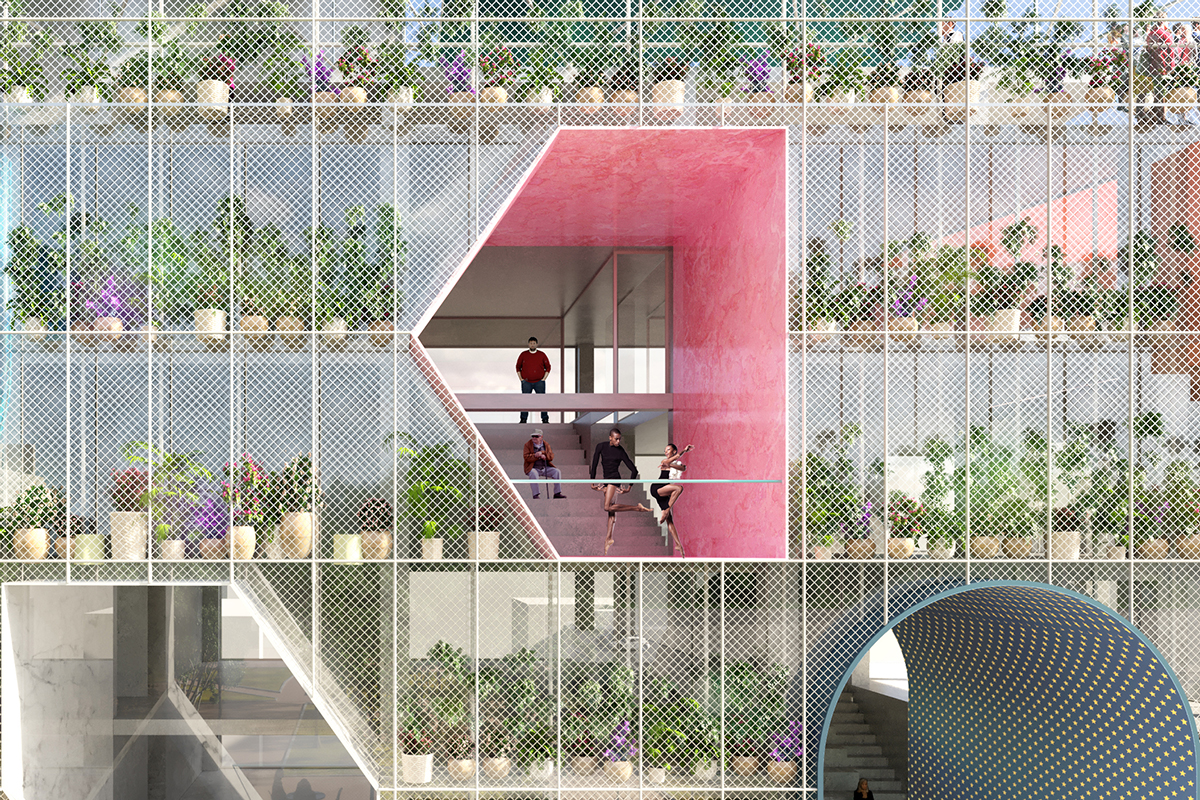
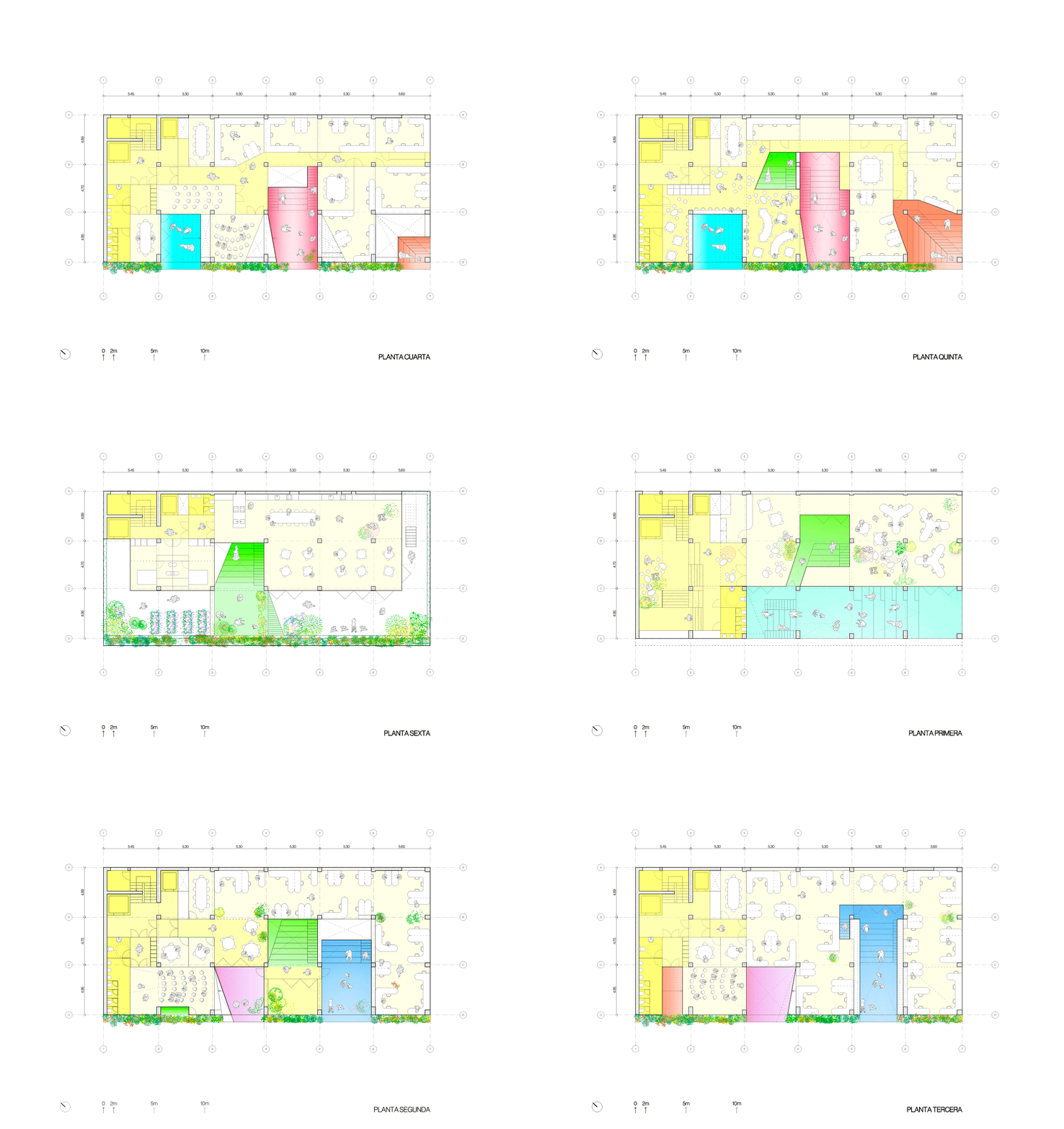
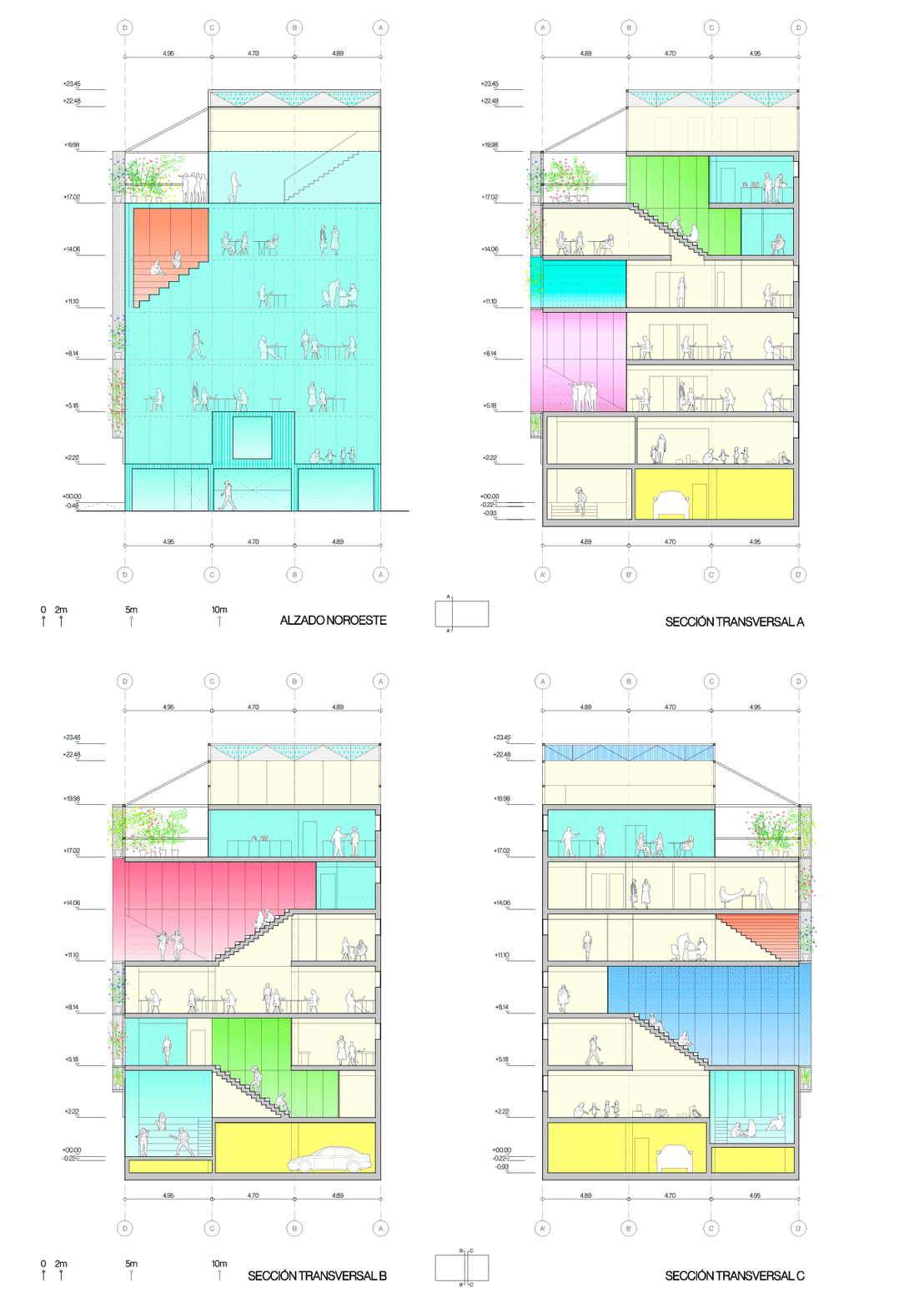
The refurbishing strategy for this 1960s building begins by consolidating the preexisting reinforced concrete structure and opening up singular spaces of different geometries, sizes, materials, and colours. This array of “elevated courtyards” provides ventilation and natural light inside this nearly fifteen-metre-wide block closed off by a party wall in the back and on the south side. Looking out on the adjacent green area, the “exterior rooms” act as multipurpose and leisure areas. They also act as waypoints along an architectural promenade complementary to the basic flow of foot traffic in the building. Through this itinerary of indoor and outdoor atmospheres, hard and soft, of different sizes, materials, and textures that stimulate the users’ perceptions, the street connects to the rooftop. And it ties in a network of service spaces from which to carry out maintenance and gardening without interfering in the other activities.
The façade paints a kind of “vegetation screen” of drought-tolerant indigenous plants that participate in the biodiversity of the place and help control solar radiation on the interiors while also promoting an affective relation with the community of inhabitants. Casa Diversa caters to a hybrid program with the twin aims of levelling up the DNCF’s two strategic lines: “citizen art” and “sustainable food” on one hand, and consolidating a network of alliances with local actors on different scales (neighbourhood, ward, city, region) on the other. It comprises offices, work areas, multifunctional spaces, a fab lab, an ecological store, bicycle and car parking, an events room, a tinkering zone, outdoor tables, professional kitchen, demonstration kitchen, culinary research lab, urban gardens, and dormitories for temporary lodgings for artists and scientists.
The project is structured around a dual system based on an infrastructural support and an array of adaptive elements. The communications core is reconfigured to integrate the body of installations and services and give universal accessibility to the centre. A network of strategically distributed terminals broadens the potential for use of each space by making it easier to modify over time. A set of flexible elements increases the chances of interaction in each space. As a whole, the system ensures comfort and sets an optimum framework of operational possibilities that increases the versatility of the space for innovation and its ability to adapt to future conditions.
The proposal is predicated on the following ecological strategies: implementation of bioclimatic guidelines; decarbonization project; reduction in the demand for operating energy and adjustments in installed power; adaptation of the building’s metabolism; the use of biogenetic materials; care for the ecological footprint by life cycle analysis; tracking the chains of custody; emissions control; installing renewable fountains and heat recovery; re-using grey rainwater; developing new daily rituals to reinforce a culture of ecology.
Casa Diversa’s field of action unfolds on multiple scales: environmental (in the ecological endeavour of its life cycle and as part of its decarbonization strategy); social (in the activation of a diversity of projects, policies, and alliances); material (in its functional, ecosystemic, and affective dimension); perceptive (from detail to urban landscape); symbolic (on the plane of the imaginaries). Casa Diversa rises up on the horizon in Arganzuela like a heterogenous, plural space that aims to become a model reference point for the city of Madrid.
1. System. Intervention protocols to singularize spaces and unfold programs.
Limits that enable possibilities, caring for the possible.
2. Diversify. Strategies for infiltrating diversity.
Generic bodies, plural transformations.
3. Promenade. Intertwined paths to increase chance encounters.
Infrastructures of communication, amplifiers of interaction.
4. Ecological performativity. Intra-scalar strategies (in space and time) that attend to socioecological endeavours.
Construction details, ecological portals.
5. Other aesthetics. Scouting out other experiences beyond the “fossil culture.”
Thermodynamic aesthetics, but not only.
6. Desireful atmospheres. Ambiences as desirable and desiring objects.
Ecological architectures, infrastructures of desire.
7. Expanded neighbourhood. Architectural trials for encounters between humans and more-than-humans.
Interspecies diplomacy, broadening the cosmos of the political.
- *Between 2018 and 2020, Superlatif operated as an interdisciplinary platform for strategic project development (consulting, cultural management, architecture, social action, and innovation) that provided comprehensive solutions. It was configured by the Container (Husos and elii) and Content (Ultrazul) teams. Superlatif was the team responsible for designing the research methodology, creation, and development of the feasibility study for the implementation of the new headquarters for the Daniel and Nina Carasso Foundation (DNCF) in Madrid. Casa Diversa is one of the three spatial prototypes of this feasibility study.
- Spatial development and architectural design:
- Husos arquitecturas (Camilo García, Diego Barajas) + elii [oficina de arquitectura] (Uriel Fogué, Eva Gil y Carlos Palacios)
- Development of the economic, management, and social innovation model:
- Ultrazul (Julia López Varela + Zuloark)
- An initiative promoted and coordinated by:
- Fundación Daniel y Nina Carasso
- Container contributors:
- elii [oficina de arquitectura]: Lucía Fernández, Ana López, Raquel García, Juan Mateos, Mónica Palfy, Marta Vaquero, Teresa Martínez, Claudia Sánchez
- Husos arquitecturas: Giulia Poma, Elena Taliano, Álvaro Heredia, Aníbal Arenas, Ilaria Sasdelli, Jimena Jaén, João Manfrinato
- Content contributors:
- Zuloark
- Key contributors Superlatif:
- Ethical real estate manager
- GroupMind: Javier Fernández, Mariam Nieto
- Legal structure and legal advice:
- Aquo: Javier Blanco, Adela Navarro
- Allies (other collaborators):
- Graphic Report:
- David Cárdenas
- Image, graphic design, ideograms, and identity:
- Relaja el Coco: Francesco Furno, Pablo Galeano, Lorenzo Appiani, Pilar Torres, Ester Rodríguez
- Ethnographic record:
- Adolfo Estalella, Teresa Tiburcio
- Audiovisual and photographic recording:
- Manila Films: Daniel Goldmann, Xavi Fortino, Josep Fernández
- Expanded Container Team:
- Energy management consulting:
- Cundall: José Castilla, Miguel Fernández
- 3D visualization:
- Manu-facturas; Manuel Monteserín
- Expanded Content Team:
- Consulting on activation, management, and governance:
- Zuloark
- Financial analyst:
- María Giselle Pérez
- Consultoría de comunicación:
- Alejandra Calvo
- Communication consulting:
- NonNominus: Lucía Espinos
- Others:
- Participation in meeting as an external guest:
- Selina Blasco
- Surface:
- 2603m2
- Date:
- 2019
- Location:
- Barrio Legazpi, Distrito Arganzuela, Madrid